Introduction — Why this guide matters
Choosing between a catamaran and a monohull is more than a style decision — it shapes how Sie sail, who Sie bring aboard, and what kind of adventures Sie can expect. This article dives deep into “Catamaran Pros Cons” so Sie can make an informed choice for charters, purchases, or simply to understand why catamarans have become so popular for coastal cruising and family trips. Expect practical advice, real-world trade-offs, and checklists that make planning easier.
Many rig choices affect how a vessel behaves under sail and how manageable it feels for a cruising crew; if Sie want to understand how different sailplans change handling, stability, and reefing strategy, a closer look is useful. For readers who wish to dig into specific sailplan details, the Cutter Sailing Characteristics resource explains how a cutter rig changes sail balance and why that matters when weighing Catamaran Pros Cons for longer passages or mixed-crew trips.
Multihull crews sometimes consider alternative mast configurations to improve sail handling and balance in variable conditions; thinking about whether a two-masted setup would suit your plans can make a real difference. If Sie are comparing options for easier reefing, divided sail area, or smoother helm balance, read the clear comparison at Ketch vs Sloop to better frame the Catamaran Pros Cons that influence comfort and safety on extended cruises.
Finally, if Sie would like a broad orientation of different hull and rig types before deciding which platform meets your goals, it helps to review a comprehensive overview; understanding the spectrum of designs makes the trade-offs more concrete. The general guide to Sailing Boat Types gives useful context and helps Sie place Catamaran Pros Cons in perspective when comparing multihulls to monohulls and other sailing platforms.
Tamtam Sailing’s Quick Snapshot: Catamaran Pros Cons
Before we dig into details, here is a clear snapshot of the primary Catamaran Pros Cons that matter for most sailors:
- Pros: Exceptional stability, roomy accommodations, shallow draft for island hopping, often superior off-wind speed, easy socializing onboard, and excellent comfort for passengers prone to seasickness.
- Cons: Higher initial and docking costs, potentially reduced upwind performance, different emergency dynamics compared to ballasted monohulls, bridgedeck slamming in certain seas, and often more complex maintenance (two hulls, two engines).
Is a Multihull the Right Choice for Beginners?
Many new sailors glance at a catamaran and think: “That looks safe and easy.” That impression has merit — but it’s not the whole story. To evaluate Catamaran Pros Cons for beginners, consider intentions, comfort thresholds, and desired skills.
When catamarans are a great match for beginners
Catamarans can be an excellent way to get people excited about sailing. If Sie value stability and an easygoing onboard lifestyle, cats reduce the intimidating heel and give more usable living space. For families, party groups, and social sailors, the extra deck area and multiple cabins make day-to-day life simpler and more pleasant.
- Comfort-first learning: Less heel makes cooking, moving about, and basic seamanship tasks friendlier.
- Low motion sickness: Those prone to seasickness often fare better on cats due to reduced rolling.
- Shallow-water access: Beginners exploring archipelagos will appreciate anchorages off-limits to deeper-keel boats.
When a monohull may be better for first-timers
If Sie want to build traditional sail-handling skills, learn how a boat responds to heel, or plan serious offshore passages, a monohull can teach different — and valuable — lessons. Ballast, heeling feedback, and windward performance are training grounds for seamanship that catamarans don’t always provide.
- Seamanship fundamentals: Heel provides natural feedback about sail trim and wind; losing that can delay intuition-building.
- Cost considerations: For many beginners, a monohull will be easier on the wallet for purchase, marina fees, and repairs.
- Offshore safety training: Monohulls often have predictable self-righting behavior in knockdowns, a consideration for trans-ocean ambitions.
Catamaran vs Monohull: Pros, Cons, and Practical Tips
A side-by-side look helps highlight why certain sailors choose one over the other. Here are practical comparisons focusing on handling, performance, liveability, cost, and safety — all key Catamaran Pros Cons.
Handling and maneuvering
Catamarans often have twin engines and twin rudders, which changes docking and close-quarters behavior. With practice, differential thrust becomes a powerful tool — spinning the bow without a tug. But be warned: the lack of heel removes a tactile cue many skippers use to judge power and status of the sails.
Practical tip: spend time at low speed practicing engine combinations before guests board. It feels weird at first, but becomes intuitive quickly.
Performance
Performance is situational. On reaches and downwind legs, many catamarans outpace similar-length monohulls thanks to lower displacement and reduced wetted surface. Upwind, a well-designed monohull often points higher and can punch through waves more effectively.
If Sie plan primarily coastal island-hopping with a mix of light-to-moderate winds, cats will likely shorten passage times. If Sie expect frequent tight upwind work or heavy-weather passages, consider the trade-off.
Comfort and liveability
This is where catamarans truly shine. Wide beams lead to spacious cockpits, separate sleeping hulls, and often generous headroom. For long days of entertaining or families wanting personal space, cats are built for comfort.
Cost and maintenance
Expect higher purchase prices per foot and possible increased marina fees for wide beams. Maintenance can be more involved: two engines, two sets of systems, and twice the hull surface to inspect. On the flip side, fuel efficiency under power and lower heel-related wear can offset some running costs.
Seaworthiness and safety
Safety is nuanced. Catamarans offer redundancy in systems and a stable platform. But because they rely on form stability over ballast, their capsize and recovery dynamics differ. In severe conditions, self-righting is not guaranteed as with many monohulls. Still, for well-prepared coastal cruising and standard charter conditions, cats are safe when respected and properly sailed.
Why Catamarans Shine: Pros for Family Trips and Tours
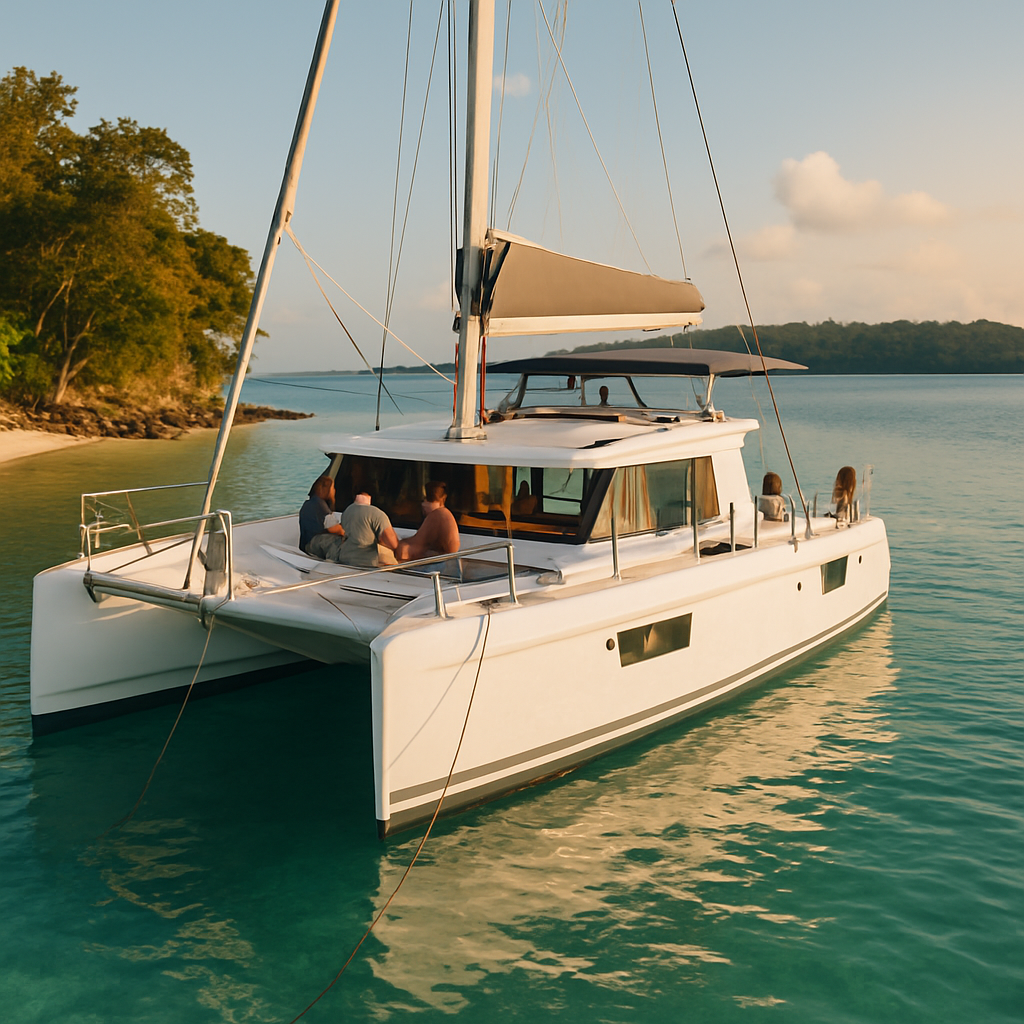
For holidaymakers and tour operators, Catamaran Pros Cons often tilt decisively in favor of cats. Here’s why they are frequently the vessel of choice for family holidays, corporate outings, and island tours.
Top family-friendly advantages
- Privacy and layout: Multiple cabins with en-suite options and separation between living areas reduce friction on longer trips.
- Stable social spaces: Large cockpits, sprawling saloons, and trampolines make group activities easier and safer.
- Shallow anchoring freedom: Access to charming coves and beaches improves the holiday experience dramatically.
- Easy provisioning and storage: Bigger fridges and storage space mean more fresh food and fewer supply runs.
Family safety considerations
While cats are family-friendly, supervision and a few safeguards are essential: check trampoline integrity, ensure strong guardrails, provide properly-sized lifejackets for children, and teach simple movement patterns aboard. These small measures prevent most incidents.
Navigating Catamaran Trade-offs: Stability, Speed, and Maneuverability
Design choices in catamarans represent intentional trade-offs. Understanding these will help Sie pick the right boat for your cruising style and reduce surprises on the water.
Stability — a double-edged sword
The wide stance of a catamaran gives outstanding transverse stability. That translates to minimal heel and a more comfortable platform. The downside: form stability means less intrinsic feedback and different behavior during extreme events. A cat that capsizes can be more difficult to right than a ballasted monohull.
Speed — when cats excel
Cats excel on reaching and downwind points of sail. They accelerate quickly, maintain higher average speeds in moderate conditions, and can make passages more enjoyable for crews who want to spend more time swimming and less time motoring.
Maneuverability — practical tips
- Practice differential throttle control in calm conditions so Sie avoid last-minute learning during a busy marina arrival.
- Approach berths at low speed and with a plan — wide beams and windage can push a cat surprisingly fast.
- Confirm berth width in advance; many marinas have limited slips for wide multihulls.
Catamaran Safety and Comfort: What to Know Before Booking a Charter
Booking a charter is exciting, but a smart pre-charter routine avoids headaches. Whether Sie are bareboat or skippered, use this checklist to address the most relevant Catamaran Pros Cons for safety and comfort.
Pre-charter checklist (detailed)
- Bridgedeck clearance: Ask for exact measurements and recent reports; lower bridgedecks slam sooner in choppy seas.
- Engine and systems check: Verify both engines, cooling systems, and prop condition; dual-engine redundancy is valuable only when both are serviceable.
- Fuel and range: Understand fuel consumption under sail and power; cats can be efficient, but long motoring legs require planning.
- Bilge and water ingress: Check bilge pump operation, manual pump accessibility, and any signs of leaks in cabins or engine rooms.
- Life-saving equipment: Confirm liferaft, PLB or EPIRB registration, and modern VHF/DSC or AIS functionality.
- Dinghy readiness: Test outboard start, examine dinghy for leaks, and verify boarding ladders for shore transfers.
- Safety lines and nets: Inspect netting and attachment points for wear, especially if children will be aboard.
- Navigation and backup: Ensure updated electronic charts, paper charts as backup, and familiarity with autopilot and chartplotter.
- Weather limits: Read the charter company’s weather policy and ask the skipper about go/no-go thresholds.
- Insurance and deposit: Understand deposit structures, damage policies, and acceptable use zones.
Practical Sailing Tips for Making the Most of a Catamaran
Some tricks come from experience; here are practical tips that make a catamaran cruise smoother and safer.
- Weight distribution matters: Keep heavy items low and near the center to reduce pitch and improve comfort at speed.
- Trim for the conditions: Cats are less forgiving if overpowered. Reef early and use appropriate headsails for upwind work.
- Practice engine maneuvers: Differential thrust, slow-speed pivots, and stern-to berthing are fundamental skills.
- Watch the bridgedeck: In confused seas, bridgedeck slamming can ruin a night’s sleep — choose sheltered anchorages when the forecast looks bumpy.
- Secure everything: Even gentle motion can toss unsecured items between hulls; lashing pans, fridges, and loose gear prevents damage.
Common Misconceptions About Catamarans
Myths spread quickly. Here are some clarifications to correct common misunderstandings about Catamaran Pros Cons.
- “Cats can’t go offshore”: False. Properly outfitted bluewater catamarans complete long passages; the key is design, maintenance, and experienced crews.
- “They never capsize”: No vessel is invulnerable. Cats resist heeling but can capsize in extreme conditions; understanding limits is essential.
- “Cats are always faster”: Not always. On certain points of sail they outperform, while upwind or in heavy seas they can be slower than a good monohull.
Final Considerations: Choosing the Right Boat for Your Sailing Goals
The decision comes down to three core questions: Where will Sie sail? Who sails with Sie? What experience do Sie want? Match the answers to the Catamaran Pros Cons and the right choice becomes clear.
- Family island-hopping and charters: Catamarans frequently offer the best comfort, privacy, and shallow-water access.
- Seamanship and offshore ambition: Monohulls may teach valuable skills and provide reassuring offshore behavior; consider training on both hull types.
- Budget and maintenance: Consider ongoing marina costs, twin-engine service, and insurance when calculating ownership budgets.
- Charter flexibility: For vacation-style sailing where convenience and guest comfort matter most, catamarans are often the preferred option.
Whatever option Sie choose, the best investments are practice and preparation. Spend time learning the boat’s idiosyncrasies, check weather carefully, and treat every passage as an opportunity to improve.
FAQ — Frequently Asked Questions on Catamaran Pros Cons
Are catamarans safe for family cruising?
Yes, catamarans are widely considered safe for family cruising when used within their design limits and maintained properly. Their lateral stability reduces heel and the risk of falls for children and less-experienced passengers. However, Sie should ensure safety measures are in place: child-size lifejackets, secure netting, reliable guardrails, and clear onboard movement rules. Additionally, check the boat’s maintenance history and safety gear before departure.
Do catamarans reduce seasickness?
For many people, catamarans significantly reduce seasickness because they heel less and roll less than monohulls. That gentler motion helps passengers remain comfortable during day sails and short passages. Nevertheless, motion sensitivity varies by individual, and conditions with a lot of beam seas can still cause discomfort; bring medication or acupressure bands if Sie are prone to seasickness.
Can a beginner handle a catamaran on a bareboat charter?
It depends on the charter company’s requirements and the skipper’s prior experience. Many companies expect proof of competence for bareboat multihulls because twin-engine handling and bridgedeck behavior differ from monohulls. If Sie lack multihull experience, consider a skippered charter or a short training course to build confidence and learn key maneuvers before attempting a bareboat multihull.
How do maintenance and ownership costs compare to monohulls?
Owning a catamaran often means higher initial purchase prices and potentially higher marina fees due to beam. Maintenance involves two hulls, two engines, and duplicated systems, which can increase service costs. On the other hand, cats can be fuel-efficient under power and suffer less heel-related wear on interior fittings. When budgeting, include marina fees, insurance, engine servicing, and occasional haul-out costs for two hulls.
Are catamarans suitable for bluewater (offshore) passages?
Some catamarans are designed for bluewater cruising and complete ocean passages successfully. The suitability depends on design, build quality, outfitting, and crew experience. If Sie aim for offshore voyages, choose a proven bluewater multihull, outfit it with robust safety equipment, and ensure the crew has offshore training. Avoid assuming that all production cruising cats are inherently fit for extreme offshore conditions.
How does upwind performance compare to monohulls?
Generally, monohulls point higher and perform better upwind due to their deeper keels and ballast. Catamarans tend to perform very well on reaches and downwind legs but may make more leeway upwind. Recent multihull designs with daggerboards or engineered keels improve windward performance, so consider specific design features rather than assuming all cats struggle upwind equally.
What should Sie inspect before chartering a catamaran?
Prioritize bridgedeck clearance, both engines’ condition, bilge pump operation, safety gear (lifejackets, EPIRB, liferaft), dinghy and outboard readiness, netting condition, chart and electronics currency, and charter insurance terms. Ask about recent survey or maintenance records and confirm the charter company’s weather policy. A thorough check reduces surprises and highlights any immediate concerns before departure.
How do docking and marina logistics differ for catamarans?
Docking a catamaran often requires more planning due to beam and windage. Many marinas have limited slips suitable for wide multihulls. Practice differential thrust and slow-speed control, approach berths with a clear plan, and call ahead to reserve an appropriate space. Consider stern-to mooring or med-mooring options offered in some popular cruising areas.
What insurance considerations are unique to catamarans?
Insurance premiums can differ for multihulls because of beam-related marina risk, the cost of twin engines, and charter usage if applicable. Be transparent with insurers about intended use (private cruising vs. charter), crew experience, and equipment like liferafts and AIS. Shop around and compare policies to ensure adequate hull, machinery, and liability coverage for Sie and your guests.
How do I choose the right catamaran size and layout?
Size depends on how many guests Sie plan to host, desired privacy, and typical cruising grounds. For family cruising and charter-style comfort, 40–50 feet often balances space and manageability. For longer-handed bluewater voyages, consider a design with secure deck layout, sheltered helm, and appropriate load capacity. Visit boats in person, tour layouts, and ask about tank capacities, storage, and real-world living arrangements before deciding.
Conclusion — Balanced Choice, Informed Sailing
Catamaran Pros Cons is not a yes-or-no question — it’s about priorities. If Sie prize space, stability, and relaxed cruising, catamarans provide huge benefits. If Sie value low-upwind drag, low cost, and certain offshore characteristics, a monohull may fit better. The best route: try both, practice deliberately, and choose the platform that matches your goals.
If Sie are planning a charter or purchase and would like a personalized checklist or route suggestions for popular cruising grounds, Tamtam Sailing is happy to help — practical advice and years of accumulated tips can save Sie time, money, and a few gray hairs.