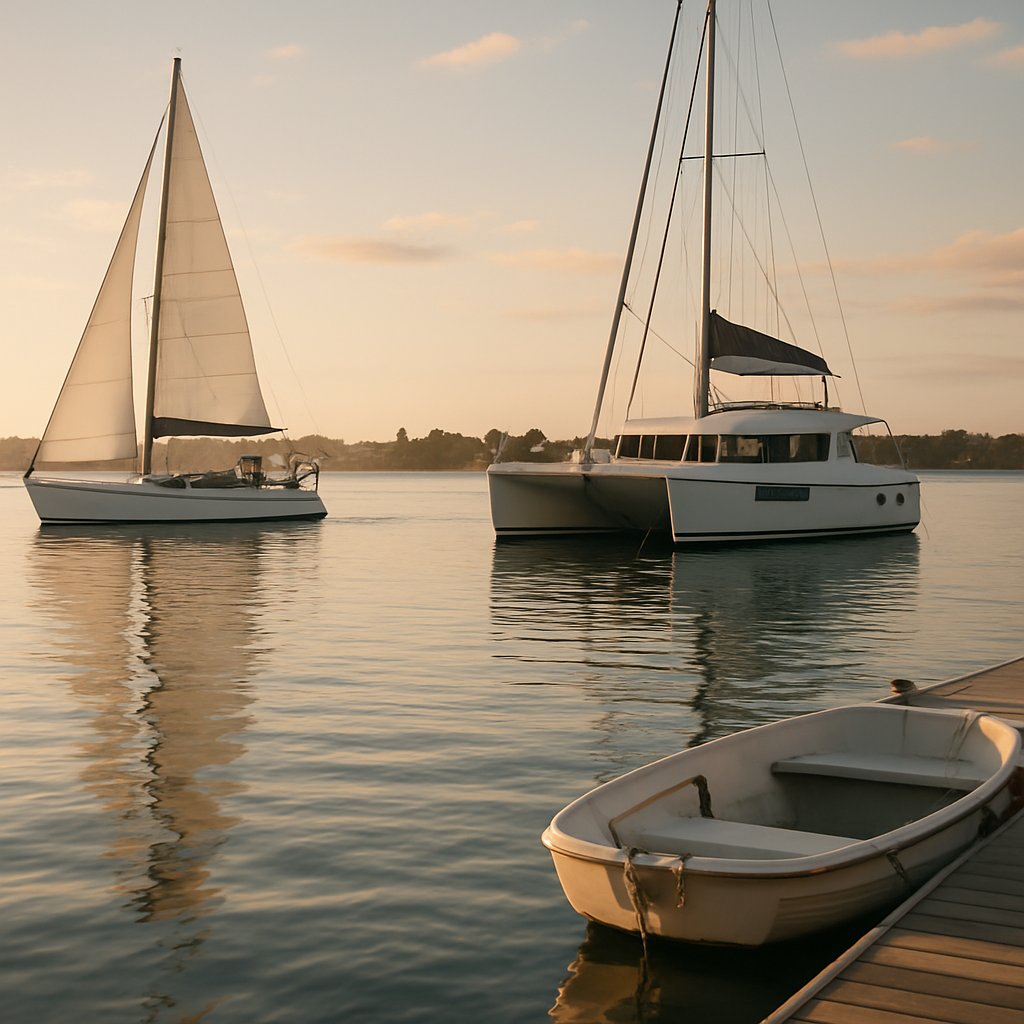
Choosing between a ketch and a sloop can feel like standing at a fork in a coastal path: both routes lead to blue horizons, but each offers a different rhythm, different gear, and a slightly different experience of the wind. In this guide we explore the question “Ketch vs Sloop” from every practical angle—so you can decide which rig better matches your sailing plans, crew, budget, and appetite for adventure. Expect clear comparisons, actionable steps, and real-world reader stories to help you decide with confidence.
Below you will find clear, practical comparisons, plus links to related rig and boat-type resources to deepen your understanding and help you place the “Ketch vs Sloop” question into a wider context before making a final decision.
If you are weighing “Ketch vs Sloop”, you may also wish to understand how multihulls compare in terms of comfort and speed. For a focused comparison of wide, stable platforms and their handling characteristics, consult our guide Catamaran Pros Cons. That article highlights trade-offs such as generous living space and minimal heel versus pointing ability and marina costs, which will assist you in framing what you truly require from a hull and rig combination when choosing a boat.
Historical and alternative rigs occasionally influence modern choices—especially when aesthetics and practicality collide. For readers interested in traditional setups and how they compare to modern sloops or ketches, review Gaff Rigged Explained. That piece outlines how gaff rigs distribute sail area, their handling characteristics, and reasons why some cruisers still favour the low-aspect power and durability of a gaff rig for particular waters and styles of voyaging.
Finally, if a broader context is desired beyond ketches and sloops, our overview of different designs is a recommended starting point: Sailing Boat Types outlines monohull and multihull options, cutter versus sloop setups, and other rig variations. Reading this material will give a clearer sense of where ketches and sloops fit within the wider world of sailing boats and help you narrow choices according to mission rather than myths.
Ketch vs Sloop: Key Differences for Beginners (Tamtam Sailing)
What is a ketch and what is a sloop?
A sloop is the archetypal modern sailboat rig: one mast, a mainsail and usually a single headsail (jib or genoa). Simple, efficient, and common across coastal cruisers and racers. A ketch, by contrast, carries two masts: a mainmast forward and a smaller mizzen aft. The mizzen sits ahead of the rudder post and adds sail area and extra sail-plan choices. When comparing “Ketch vs Sloop”, consider fewer components and greater pointing ability versus additional sail combinations and improved balance.
Core differences at a glance
| Feature | Sloop | Ketch |
|---|---|---|
| Mast arrangement | Single mast | Two masts (main + mizzen) |
| Sail handling | Fewer sails and lines; simpler | More sail combinations; more lines to manage |
| Performance | Typically faster and points better upwind | Stable, versatile; slightly slower to windward |
| Heavy-weather options | Simpler reefing strategies | Flexible storm plans; better balance |
| Maintenance | Less spar and rigging maintenance | Higher maintenance due to second mast and extra sails |
How these differences feel on the water
In practice, a sloop feels responsive and direct. Trim the genoa, adjust the main, and the boat will bite into the wind—efficient and to the point. A ketch offers modularity: trim a combination, shift sail area aft or forward, and find a comfortable balance without aggressive reefing. For many cruisers that results in reduced fatigue, particularly on extended watches. Those additional options, however, require more decisions and a little more fiddling—so reflect on whether you prefer simpler systems or the flexibility of extra sail choices.
When a Ketch Is the Right Choice for Long Voyages (Tamtam Sailing)
Flexibility and sail plan options
On extended passages, weather variations are often the rule rather than the exception. A ketch excels because it permits many sail combinations. Total sail area can be divided into smaller, more manageable sails—mizzen plus small headsail, reefed main plus mizzen, or mizzen and staysail in heavy seas. This flexibility reduces strain on individual sails and permits precise balance adjustments according to evolving conditions.
Balance and self-steering compatibility
Balance is crucial on passages. A well-trimmed ketch typically steers more steadily under a windvane or autopilot because the mizzen helps distribute the centre of effort. Reduced helm correction leads to fewer course adjustments, less autopilot workload, and a calmer cockpit. If a voyage includes lengthy downwind legs, that steadiness will materially improve onboard comfort.
Night and storm sailing
Consider a nocturnal passage with strong winds: a ketch enables controlled options—reduce the main and rely on the mizzen for balance, or set a storm trysail and mizzen to maintain steerage with minimal exposed sail. Many bluewater sailors value this redundancy because it reduces the need for frequent deck work in adverse conditions, which enhances safety and comfort.
Onboard comfort and redundancy
Smaller sails are easier to handle for ageing crews or shorthanded teams. The mizzen can provide additional shade and support for a dodger or bimini, and it adds useful sail area for motoring in light airs. There is also a redundancy advantage: damage to one spar does not necessarily terminate a passage if the other mast remains serviceable and the crew can jury-rig as required.
Trade-offs to keep in mind
Nevertheless, ketches are not a universal solution. They tend to be heavier, marginally slower upwind, and more expensive to purchase and maintain. If frequent windward sailing and competitive performance are priorities, the trade-offs may favour a sloop. Consider the ketch as a choice for adaptability and comfort; view the sloop as a choice for simplicity and performance.
Why Sloops Are Popular for Coastal Cruising: Speed, Simplicity, and Handling (Tamtam Sailing)
Simplicity for quick daysails
For weekend sailors and coastal cruisers, simplicity is often the decisive factor. Sloops require fewer sail changes, less running rigging, and present fewer opportunities for mechanical issues. Lower preparation time means more time ashore or at anchor and less time wrestling with equipment.
Upwind performance and speed
Sloops commonly feature taller, higher-aspect mains and headsails that assist pointing ability and upwind speed. If coastal sailing involves frequent beating into sea breezes or passages where elapsed time matters, the sloop’s performance advantage will be appreciated on every tack.
Lower cost and easier maintenance
Fewer spars and sails usually translate to lower annual bills. Inspections, rigging work, and sail replacements are typically less costly for a sloop. For sailors operating on a tight budget, this practical advantage frequently outweighs theoretical benefits of alternative rigs.
Better for many singlehanders
Contrary to the perception that a ketch is inherently superior for singlehanding, many solo sailors prefer a sloop. Modern furling systems, self-tailing winches, and dependable autopilots allow solo management of the sail plan from the cockpit. A concentrated and automated system can be easier to manage than two separate masts and their associated lines.
Limitations to note
Large genoas can become heavy and awkward in stronger winds when the crew is small. Modern solutions—roller-furling, cutter configurations, or dedicated storm jibs—mitigate these challenges, but careful planning for worst-case scenarios remains essential. If frequent heavy weather is expected and smaller incremental sail reductions are preferred, a ketch or cutter may still be worth considering.
Rigging, Sails, and Maintenance: A Practical TamTam Sailing Look
Standing rigging and spars
Maintenance requirements increase with complexity. Sloops have a single mast to inspect; ketches have two. It is prudent to evaluate stainless-steel corrosion, cotter pins, turnbuckles, chainplates, and mast-step integrity at least annually. A failing chainplate can end a cruise prematurely—regular inspections prevent such costly surprises.
Running rigging and sail handling systems
Contemporary cruising often relies on furling systems—roller furling for headsails and in-mast or in-boom furling for mains. These systems enable single-person handling. Ketches benefit from smaller, easier-furled sails, but they also double the number of halyards, sheets, and reefing lines to inspect and manage. Ensure halyards are routed cleanly to avoid chafe, and replace UV-damaged running rigging proactively.
Sail maintenance
Sails are recurring costs. Ketches incur the additional expense of a mizzen and possibly a broader set of working sails (staysails, storm jibs). Inspect seams, UV-protected leech areas, and reef points regularly. Far from a sailmaker, a torn sail becomes a serious problem—carry a repair kit and learn basic sail-repair techniques.
Practical maintenance checklist
- Annual rig inspection by a qualified rigger; inspect more frequently after heavy seasons or groundings.
- Replace halyards every 8–12 years, sooner in high-UV climates.
- Service winches and furling gear seasonally to ensure reliability.
- Check chainplates and mast steps for corrosion and ensure proper bedding.
- Maintain sacrificial anodes and verify the integrity of electrical bonding to avoid galvanic problems.
Choosing Between a Ketch and a Sloop: A Step-by-Step Guide (Tamtam Sailing)
Step 1 — Define your cruising profile
Consider where you will sail most often: coastal hops with frequent anchoring, or long bluewater passages? If operations will be largely coastal, a sloop will frequently be the most suitable choice. For extended offshore work where comfort and redundancy matter, a ketch can be appropriate. Be candid about typical plans—those habits usually reveal the rig that will serve you best.
Step 2 — Evaluate crew size and ability
Reflect on who will handle sails day-to-day. Small crews may appreciate the smaller sails of a ketch, whereas singlehanders often prefer a single, well-organized sail plan with efficient furling systems. Consider the crew’s willingness to learn and maintain extra systems—some sailors enjoy the additional complexity, others do not.
Step 3 — Consider budget and logistical constraints
An extra mast entails extra expense. Winter storage, mast stepping, and spare parts for a mizzen add cost. Also verify bridge clearances and inland-waterway limits—some ketches have shorter individual masts but additional standing rigging increasing overall height. Running the numbers early will prevent unwelcome surprises.
Step 4 — Do sea trials in representative conditions
Charter or test-sail both a similarly sized sloop and ketch. Trial reefed conditions, night watches, and autopilot steering. Observe how the boat balances and how easily sail changes can be managed from the cockpit. Practical experience is more revealing than any specification sheet.
Step 5 — Inspect the whole vessel, not only the rig
Rig type is one factor among many. Hull form, keel type, displacement, and system quality influence performance and habitability. A well-maintained sloop will outperform a neglected ketch in almost every measurable way. Request maintenance logs, survey history, and transparent seller records.
Step 6 — Make a pragmatic decision
Match the rig to your worst-case scenarios. If a prolonged, uncomfortable night in heavy seas represents the greatest concern, select the rig that offers the larger safety margin. If racing and elapsed time are paramount, favour performance. If family comfort and sheltered cockpit spaces are priorities, the ketch is likely preferable. Be realistic about what you and your crew will maintain and enjoy.
Real-World Scenarios from TamTam Sailing Readers: Ketch or Sloop?
Scenario 1 — Young couple doing weekend coastal hops
Profile: Two crew, short hops between anchorages, occasional overnight. Recommendation: Sloop. Readers in this category sought quick tacks, straightforward anchoring routines, and minimal maintenance. A modern sloop with a roller-furling headsail and in-boom or in-mast furling main provided speed and convenience—ideal for relaxed days in sheltered bays.
Scenario 2 — Solo sailor planning transoceanic legs
Profile: Singlehander preparing for extended ocean crossings. Recommendation: Ketch or cutter-sloop. Some solo sailors select ketches for balanced sail plans and smaller individual sails; others prefer a cutter-sloop with a self-tacking staysail to achieve redundancy without a second mast. Decisive factors included reliable self-steering systems and methods to reduce fatigue over prolonged watches.
Scenario 3 — Family liveaboard prioritizing comfort
Profile: Family cruising for an extended period with children aboard. Recommendation: Ketch. Families reported the mizzen’s utility in creating sheltered cockpit areas, simplified sail handling for tired crews, and a more comfortable motion at anchor. The increased maintenance was generally acceptable compared with the gains in livability.
Scenario 4 — Club racer who also weekends with family
Profile: A sailor seeking competitive weekend performance and occasional family cruises. Recommendation: Sloop. Upwind speed and tuning simplicity rendered the sloop the better choice. Many owners accepted a modest reduction in offshore comfort in exchange for a responsive and competitive sail plan.
Scenario 5 — Long-term cruiser on a limited budget
Profile: Long-distance aspirations but a constrained maintenance budget. Recommendation: Sloop. Readers facing financial limits typically selected sloops due to simpler upkeep, lower replacement costs, and fewer surprises while cruising in remote regions. Consistent preventive maintenance and conservative sailing kept these cruisers both safe and solvent.
FAQ — Frequently Asked Questions about “Ketch vs Sloop”
Q: Which rig is better for offshore passages: a ketch or a sloop?
A: There is no absolute answer; it depends on priorities. If you prioritise flexible sail plans, smaller individual sails, and improved balance for long downwind runs, a ketch often provides advantages. If you prioritise upwind performance, simplicity and lower maintenance costs, a sloop is frequently preferable. Consider crew size, self-steering setup, and likely weather when making the decision.
Q: Is a ketch significantly slower than a sloop?
A: Generally, a ketch is slightly slower to windward due to lower aspect sails and often higher displacement. However, hull design, sail trim and overall displacement influence performance substantially; a well-tuned ketch can perform admirably and may be faster on certain points of sail or in heavy-weather conditions where balance matters more than raw pointing ability.
Q: Can a singlehanded sailor manage a ketch?
A: Yes, many singlehanders successfully manage ketches when the vessel is fitted with efficient furling systems, organized line runs and reliable autopilot or windvane steering. Nevertheless, the additional lines and systems increase complexity, so singlehanders should ensure excellent deck layout and automation before committing to a ketch.
Q: How much more does a ketch cost to maintain?
A: Maintenance costs for a ketch are higher due to the additional mast, boom, standing and running rigging, and the extra sail (mizzen). Expect higher costs for rig inspections, spare parts and sail replacements. Exact figures vary widely with boat age, materials and usage patterns—requesting maintenance logs and obtaining surveyor estimates will clarify likely ongoing expenses.
Q: Is converting a sloop to a ketch feasible?
A: Converting a sloop to a ketch is a major undertaking requiring structural changes (mast step, chainplates), re-evaluation of balance, and professional engineering. It is rarely cost-effective unless driven by a specific operational requirement and supported by a substantial budget for professional work and subsequent tuning.
Q: Which rig is safer in heavy weather?
A: Safety in heavy weather depends more on preparation and sail plan choices than rig type alone. Ketches offer more small-sail options and easier balance, which can be advantageous. Well-prepared sloops with proper storm sails and conservative seamanship can be equally safe. Focus on a well-understood storm strategy, good seamanship and appropriate gear, regardless of rig.
Q: What rig is best for a family living aboard?
A: Many families favour ketches for the mizzen’s contribution to a sheltered cockpit and easier handling of smaller sails. That said, some families choose sloops for simplicity and lower maintenance. Evaluate priorities: living comfort and shade (ketch) versus lower upkeep and simpler systems (sloop).
Q: How do cutter rigs fit into the “Ketch vs Sloop” decision?
A: Cutter rigs are a variation of the sloop concept with an additional inner forestay and staysail, offering many of the ketch’s flexible sail-plan advantages without a second mast. A cutter-sloop can be an excellent compromise: it retains the simplicity of a single mast while providing better heavy-weather options and balance.
Q: Do ketches have worse resale value?
A: Resale value depends on market demand, condition and region. In some markets ketches command a premium among bluewater cruisers; in other markets they are less popular than modern sloops. Maintain documentation, service history and present the vessel honestly to preserve resale value regardless of rig.
Q: What are practical next steps to choose the right rig?
A: Define your cruising profile, evaluate crew and budget, charter representative boats, and obtain professional surveys. Hands-on sea trials in likely conditions reveal more than specifications; combine those trials with honest budgeting and realistic maintenance planning to reach a sound decision.
Conclusion — Making the “Ketch vs Sloop” Choice That Fits You
There is no universal winner in the “Ketch vs Sloop” debate—only the proper rig for your lifestyle. Choose a sloop if you value simplicity, upwind performance, and lower ongoing costs. Choose a ketch if you prefer flexible sail plans, improved balance on long passages, and additional onboard comfort. Ultimately, the best decision arises from sea trials, an honest appraisal of crew capabilities and budget, and consideration of the worst-case scenarios you are prepared to manage. If uncertainty persists, charter both rigs in representative waters for a week each—practical experience remains the most reliable guide.
Whichever rig you select, prioritise diligent maintenance, sensible sail plans, and solid seamanship. May your wind be fair, your anchor hold, and your coffee remain hot when the seas are calm. Sail safely.