Catch Attention, Build Confidence, Take Action: Why Your Emergency Flares Kit Could Be the Difference Between Rescue and Regret
Imagine dusk falling on a glassy sea, the horizon swallowed by gray, and your engine coughing its last breath. Your radio may be crackling. You have checked the weather. Yet visibility is poor and there are no other boats in sight. In such moments, an Emergency Flares Kit becomes far more than a legal requirement or a box of noisy props — it becomes your voice on the water. This guide explains why an Emergency Flares Kit is essential, how to choose the right combination for your voyage, and how to keep it reliable when you need it most.
When preparing your vessel, it is wise to think broadly about complementary gear: for example, secure moorings and deck organization rely on a proper Anchor And Line setup, reliable positioning and route planning benefit from robust Chartplotter Navigation, and selecting an Essential Sailing Equipment checklist helps ensure all safety elements work together. Including these items in your pre-departure routine reduces clutter and confusion during an emergency, increases the chance that your visual signals will be seen by the right people, and gives you practical redundancy when electronic and mechanical systems falter.
Emergency Flares Kit: A Critical Safety Must-Have for Every Sailor
An Emergency Flares Kit is one of the simplest and most visible tools to signal distress. Electronics fail. Batteries die. Antennas break. Visual signals do not. A bright, well-aimed flare or a plume of orange smoke is immediately readable by search-and-rescue teams and nearby mariners. If you sail at all—coastal trips, weekend jaunts, or bluewater adventures—carrying an Emergency Flares Kit is common sense. It increases the odds that a rescue party will locate you quickly, reducing time in exposure and panic.
Beyond the life-saving function, flares integrate into a layered safety system. They complement radios, EPIRBs (Emergency Position Indicating Radio Beacons), and VHF DSC alerts. Think of flares as the visual closing argument to the electronic case you present to rescuers: loud, unmissable, and intuitive.
Understanding Emergency Flares: Types, Lifespan, and How to Use Them
Types of flares and when to use each
Not all flares are created equal. Choosing the right combination for your Emergency Flares Kit depends on time of day, sea state, and distance from help.
- Handheld red flares: Short-range, bright and easy to deploy. Perfect for close-quarters signaling at night or to attract attention of nearby boats. They burn intensely for a short time and should be held away from the body.
- Parachute (rocket) flares: High-altitude projectiles that deploy a suspended, slow-falling flare visible for miles. These are the go-to for offshore night-time distress when you need range.
- Orange smoke signals: Daytime markers that produce dense, highly visible orange smoke. Great for marking position during daylight and for pointing out a survival raft or debris field.
- Buoyant and floating flares/smoke: Designed to remain on the water if dropped. Useful for marking a waterborne position such as an overturned dinghy or life raft.
- Combination kits: Many commercial Emergency Flares Kits combine rockets, handhelds, and smoke signals to cover both day and night needs.
Lifespan, expiry, and reliability concerns
Pyrotechnic devices are perishable. The active chemicals, seals, and casings degrade over time. Typical shelf life ranges from about three to five years, depending on manufacturer specifications. Storing flares in damp or hot environments shortens their useful life. Always check the printed expiry date and rotate stock before it lapses.
Do not rely on a flares kit long past its date. An expired rocket may still ignite, but it might not reach proper altitude or burn at the expected intensity — critical factors when seconds count. Treat expiry dates seriously: replace rather than hope.
How to use flares safely and effectively
When stress and wind combine, even a simple task can become tricky. Practice basics on shore (without lighting live pyrotechnics) so that in an emergency you move with calm, efficient motions.
- Read and memorize the operating instructions for each type of flare in your Emergency Flares Kit.
- For handheld flares, hold downwind, point away from your body and clothing, and keep the burning end clear of rigging and sails.
- For rockets, ensure a clear arc above, free from masts, booms, or overhead obstacles. Fire downwind and angled away from the vessel.
- Use smoke signals in calm conditions for daytime marking; they are less effective in heavy rain or high winds that disperse smoke quickly.
- After use, allow spent devices to cool fully and stow them safely for proper disposal. Do not dump them overboard.
What to Include in Your Emergency Flares Kit: A Practical Packing List
The exact composition of an Emergency Flares Kit will depend on regulatory requirements in your region and the nature of your trips. Below is a practical list tailored to be versatile and useful for both coastal and moderate offshore passages.
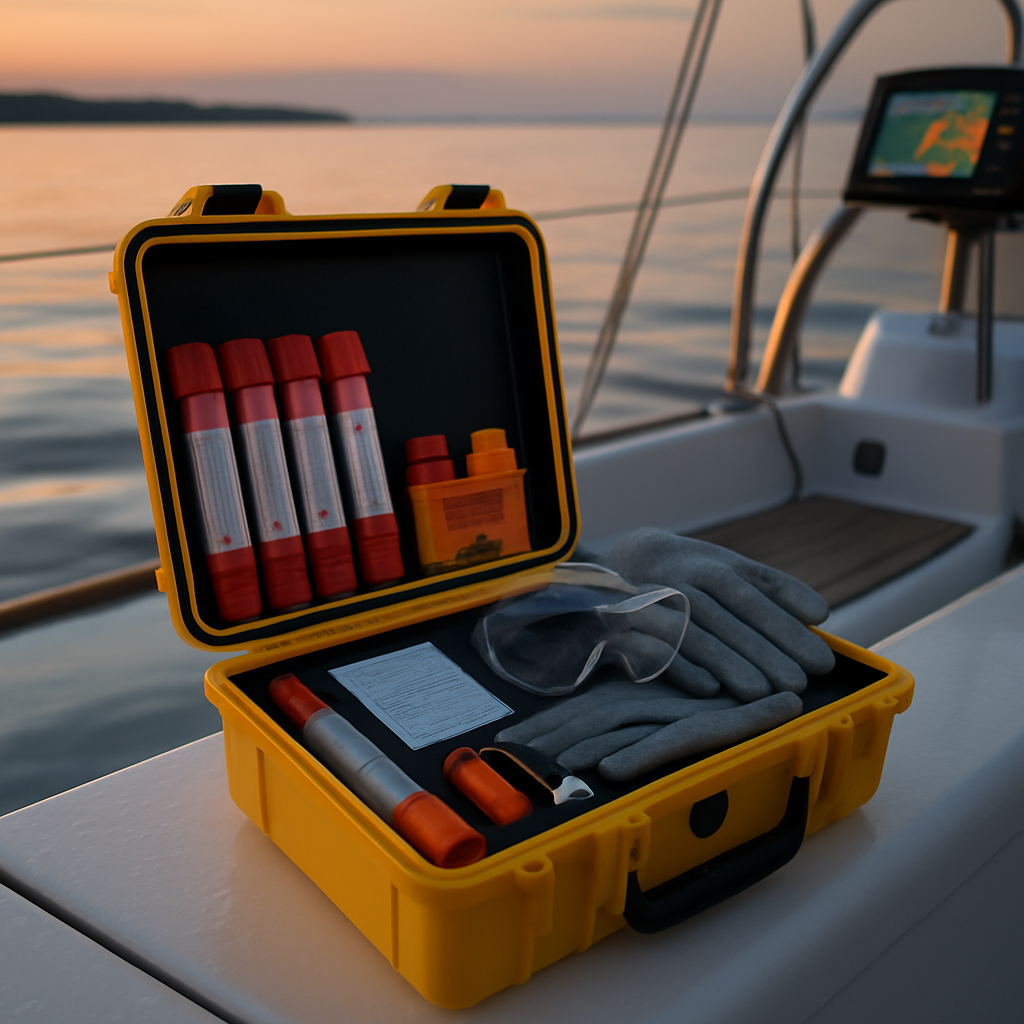
- Parachute rockets: 2 units for offshore travel; at least 1 for coastal—preferably 2 for redundancy.
- Handheld red flares: 4–6 pieces. These are your quick-response, short-range signals.
- Orange smoke canisters: 1–3 units depending on crew size and daylight risk exposure.
- Buoyant marker: 1–2 buoyant flares or marker smoke devices for on-water position marking.
- Waterproof, buoyant storage case: Clearly labeled and stored where it can be reached from the cockpit and grab bag.
- Spare ignition tools: Many flares have built-in igniters; still, keep waterproof matches and a lighter as backups where compatible.
- Protective gloves and safety glasses: To handle hot devices and reduce risk of injury.
- Laminated quick-reference card: Simple step-by-step instructions tucked in the kit for high-stress moments.
- Maintenance log: A small tag or booklet with purchase dates, expiry dates, and inspection notes for accountability.
Pro tip: keep a compact secondary kit in your grab-bag or liferaft pack. If the primary kit is lost during a rapid abandonment, that secondary kit may be the one item that gets you seen.
How to Inspect and Maintain Your Emergency Flares Kit on a Regular Basis
A kit is only as useful as its weakest component. Regular inspection and thoughtful storage ensure that when you reach for a flare, it performs exactly as intended. Spending fifteen minutes twice a year will repay you many times over.
Routine inspection checklist
| Item | What to check | Action if failed |
|---|---|---|
| Expiry date | Confirm printed expiry; check manufacturer batch codes | Replace expired items immediately |
| Casing and seals | No corrosion, dents, or signs of water ingress | Discard and replace damaged devices |
| Container condition | Waterproof, buoyant, labeled, accessible from the cockpit | Repair or replace container; relocate if necessary |
| Ignition tools and accessories | Matches dry, lighters function, protective gloves intact | Restock and verify functionality |
Inspection frequency and record-keeping
Inspect at least twice a year—commonly at season start and end—and again before any extended passage. Add a quick visual check to your pre-departure routine. Maintain a small log inside the kit: purchase date, expiry date, and the date of the last inspection. That simple habit prevents surprises.
Storage best practices
Store flares in a cool, dry place away from sunlight and heat. Vibration and salt spray accelerate deterioration; a secure, cushioned, waterproof box will extend useful life. Keep one primary kit accessible from the cockpit and a backup in the grab-bag or life raft kit. Label everything. Clear labeling speeds action under pressure.
Choosing the Right Emergency Flares Kit for Coastal and Offshore Voyages
Different voyages call for different mixes. The right Emergency Flares Kit balances regulation, risk tolerance, and redundancy. When in doubt: think expansively. The sea will always surprise you at the exact moment you expected smooth sailing.
Coastal sailing recommendations
For coastal trips within sight of shore or in busy waters, a coastal Emergency Flares Kit can be compact but effective:
- Handheld red flares (3–4) for immediate local signaling.
- One orange smoke canister for daytime marking.
- A buoyant, waterproof case stored in a cockpit locker.
- Reliance on VHF and cell coverage where available.
Offshore voyage recommendations
Offshore voyaging requires a more robust approach. You are farther from help, and visibility can be deceptive. Make your Emergency Flares Kit redundant:
- Parachute rockets (minimum two) to be visible at long range.
- Multiple handheld red flares (4–6) and several smoke canisters for day and night options.
- Secondary kit stored in the grab-bag or life raft kit.
- Complement pyrotechnics with EPIRB/PLB and DSC-capable VHF.
Regulatory and practical considerations
Local maritime authorities and flag states often dictate minimum carriage requirements. Regulatory minima are a baseline, not a target. When possible, exceed the minimum and tailor your Emergency Flares Kit to the specific risks you face—distance offshore, number of crew, weather patterns, and nearest rescue assets.
Tamtam Sailing’s Guide to Emergency Flares: Real-World Tips from a Sailing Blog
From long days refining seamanship to evenings in marina bars swapping near-miss stories, Tamtam Sailing has learned that the best gear is the gear one uses confidently. Here are practical, tested tips to make your Emergency Flares Kit actually useful when it matters.
Tip 1 — Conduct a flares drill
Practice locating and opening the kit, choosing the right device, and the firing sequence. Do a tabletop exercise first, then rehearse quick access in the cockpit. Drills reduce fumbling, speed response, and build crew confidence. It is astonishing how many people freeze on a simple task without rehearsal.
Tip 2 — Make flares accessible and obvious
Keep the primary Emergency Flares Kit where it can be reached within a few steps from the helm—preferably in a clearly labeled, secured cockpit locker or pouch. A secondary kit in the grab-bag is insurance. If you must climb into the bunk or rummage around the forepeak, you will lose precious minutes.
Tip 3 — Combine pyrotechnics with electronics
Signal with flares while simultaneously employing digital alerts: activate DSC on your VHF, trigger your EPIRB/PLB, and call the nearest rescue authority. Multiple concurrent signals improve the probability of a rapid and coordinated response.
Tip 4 — Choose signals for the conditions
Smoke works in calm daylight but is poor in heavy seas and rain. Rockets show well at night and over distance but are harder to launch in heavy pitching. Think ahead: what will you use if it is drizzling at dawn versus calm midnight? Prepare for both scenarios.
Tip 5 — Rotate stock and carry spares
Rotate flares into the kit when new ones arrive so nothing sits past its prime. Keep spares in a separate location. If you must abandon ship, the primary kit may go down with the vessel; a secondary kit increases survival odds.
Tip 6 — Dispose responsibly
Used and expired flares are hazardous. Do not toss them in the trash or overboard. Many marinas and municipal hazardous-waste programs accept them. Some suppliers run take-back schemes. Proper disposal protects the environment and avoids legal trouble.
Final Checklist: Integrating Your Emergency Flares Kit into a Safety System
- Know the location of the Emergency Flares Kit and ensure the crew knows access procedures.
- Inspect flares twice annually and before long voyages; replace before expiry.
- Practice flares drills with your crew at least once a season.
- Store a secondary kit in the grab-bag or life raft pack.
- Pair flares with EPIRB/PLB, VHF DSC, and other visual signals.
- Keep protective gloves and a laminated instruction card within the kit.
- Dispose of used/expired flares via proper hazardous-waste channels.
Frequently Asked Questions (FAQ) — Emergency Flares Kit
What is an Emergency Flares Kit and why is it necessary?
An Emergency Flares Kit is a collection of pyrotechnic visual distress signals—handheld flares, parachute rockets, and smoke canisters—kept on board to attract attention during a distress situation. It is necessary because visual signals can be seen when electronic systems fail or when rescuers rely on sight to locate survivors. The kit is a simple, internationally recognized way to indicate distress and position, increasing the likelihood of a rapid rescue.
How long do flares last and when should they be replaced?
Shelf life varies by manufacturer, but most flares have an expiry between three and five years. Environmental exposure to heat, moisture, and vibration reduces their effective life. Replace flares before their printed expiry date and inspect casings and seals regularly. It is prudent to note purchase and expiry dates in a maintenance log and to rotate stock so that nothing remains unused past its recommended date.
Are flares required by law, and how many should I carry?
Requirements differ by country and vessel type. Many maritime authorities mandate a minimum set of pyrotechnics for certain classes of vessels, especially for offshore passages. Legal minima are a baseline; for safety, carry more than the minimum when you plan to travel offshore. A typical offshore recommendation includes at least two parachute rockets and multiple handheld flares, while coastal kits can be smaller. Verify local regulations and plan for redundancy.
Can an EPIRB or PLB replace the need for flares?
An EPIRB or PLB is a crucial electronic distress tool, but it does not replace the need for visual signals. EPIRBs send coordinates and initiate searches, yet rescuers still rely on visual confirmation to home in on a position, especially in crowded or difficult search areas. Use flares in combination with electronic devices to maximize detection chances.
How should I store my Emergency Flares Kit on board?
Store flares in a cool, dry, and vibration-minimized location away from direct sunlight and heat sources. Keep the primary kit where it can be accessed quickly from the cockpit and a secondary kit in the grab-bag or life raft pack. Use a clearly labeled, waterproof, buoyant container and secure it so that it does not shift underway. Proper storage significantly extends flare reliability.
How do I dispose of expired or used flares?
Used and expired flares are hazardous waste. Do not discard them in regular refuse or at sea. Contact local marinas, harbor authorities, or municipal hazardous-waste facilities for proper disposal options. Some suppliers accept expired pyrotechnics for safe disposal. Responsible disposal protects the environment and avoids regulatory issues.
What are the safest practices for using rocket flares on a pitching deck?
On a pitching deck, ensure that the firing arc is clear of masts, rigging, and sails. If possible, have someone steady you while you adopt a stable stance. Fire downwind and angle the rocket away from the vessel. If conditions are too rough for safe rocket deployment, use handheld or buoyant flares as alternatives. Training and dry rehearsals significantly reduce the risk of mishandling in real emergencies.
Where should I buy quality Emergency Flares Kits?
Purchase pyrotechnic distress signals from reputable marine suppliers, chandlers, or certified safety-equipment retailers. Verify manufacturer expiry dates and certifications. Avoid purchasing from dubious sources or expired stock. When in doubt, consult local boating organizations or maritime authorities for approved suppliers and recommended kit configurations for your intended voyages.
Conclusion
An Emergency Flares Kit is an affordable, high-impact item in any sailor’s safety arsenal. It is simple yet powerful: visual, immediate, and internationally recognized. Choosing the right mix, inspecting it regularly, practicing its use, and combining it with electronic distress aids will multiply its effectiveness. Treat your Emergency Flares Kit as more than compliance—treat it as insurance for you and your crew.
At Tamtam Sailing, we believe that good preparation equals peace of mind. Fit an appropriate Emergency Flares Kit to your voyages, practice with your crew, and keep those bright signals ready. After all, you do not plan for the rescue; you prepare for it.
Quick Reference — Emergency Flares Kit At-a-Glance
- Offshore minimum: Parachute rockets (x2), handheld red flares (x4), orange smoke (x2).
- Coastal minimum: Handheld red flares (x3), orange smoke (x1), buoyant container.
- Pre-departure: Quick visual accessibility check.
- Semi-annual: Full inspection of expiry dates, casings, and ignitors; update maintenance log.
- Storage: Cool, dry, out of direct sunlight, in a labeled waterproof buoyant box.