Attention: Want to stop drifting and sleep like a human—rather than a nervous buoy—when you drop anchor? Interest: This guide covers everything about Anchor And Line you need to choose, set, retrieve and maintain your ground tackle with confidence. Desire: Imagine a peaceful night in a sheltered bay, no alarms, no dragging—just the sea and the hum of your boat. Action: Read on, practice these steps in calm conditions, and Sie will be the crew everyone trusts at the bow.
Safety at anchor relies on a system of precautions and gear—Anchor And Line is one part of that system, and Sie should pair it with reliable safety equipment. For visibility and signaling, carry an Emergency Flares Kit appropriate to your cruising area; consult a comprehensive checklist of Essential Sailing Equipment to ensure nothing critical is overlooked; and always ensure that the crew wears well-fitted Life Jacket Essentials when conditions require it. These items complement good anchoring practice by providing contingency options if the unexpected happens, and they should be stored accessibly so Sie can reach them quickly in an emergency.
Anchor And Line: Choosing the Right Anchor For Your Boat
Choosing the right Anchor And Line begins with matching the anchor type and size to your vessel, typical seabed, and expected conditions. The right combination makes setting easier, increases holding power, and reduces stress on the boat and crew. Get this wrong and you might learn a lot about starry nights—while drifting toward the rocks.
Anchor types and their strengths
- Plow (Delta/Bruce): Excellent all-rounder. Good in sand, mud and mixed bottoms. Self-righting plows bite well after some back-down.
- Fluke (Danforth): Lightweight with high holding power in sand and soft mud. Not ideal for weed or rocky bottoms.
- Claw (CNB/Bruce-like): Reliable in many conditions, though it can be outperformed by specialized designs in certain seabeds.
- Mushroom: Best for permanent moorings in soft mud. Poor choice for temporary anchoring if mobility matters.
- Grapnel: Useful for rocky ground or hand-deployment from dinghies; not ideal for primary anchoring on bigger boats.
Sizing rules that work
Manufacturers publish sizing charts by boat length and displacement. Use them. If in doubt, choose the next larger size. A larger, properly designed anchor rarely hurts and often saves lives—and pride. For small daysailers, a Danforth that’s a grade up from chart recommendations is a smart move.
Rode composition: chain, rope, or combo?
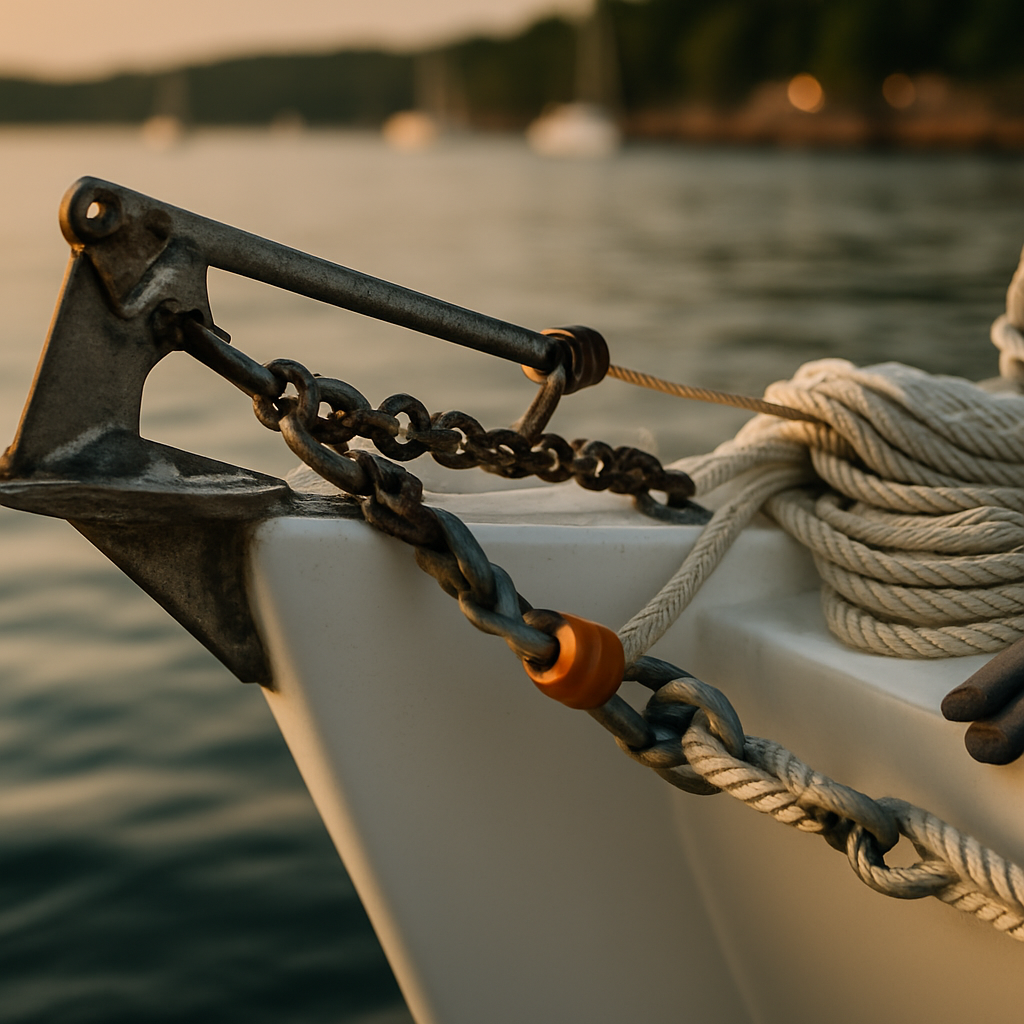
Chain reduces the angle of pull on the anchor, helps it lie flat, and resists abrasion. Nylon rope stretches and absorbs shock loads, making it comfortable on the gear and crew. The best compromise for many boats is a short length of chain at the anchor joined to nylon rope for the remainder. Larger vessels often favor full-chain rodes for abrasion resistance and better catenary.
Anchor And Line Safety Tips For Sailors And Beginners
Anchor handling is a leading cause of onboard injuries—pinched fingers, rope burns, smashed toes. Safety is not optional. It is the baseline. Here are practical habits that protect crew and gear.
Pre-anchoring safety checks
- Brief the crew on roles: who handles rode, who watches the distance and who minds the engine. Clarity prevents chaos.
- Wear gloves and non-slip footwear. Rope burns heal slowly; scuffed toes are worse in the dark.
- Inspect shackles, swivels and attachment points. Replace any rusted or deformed hardware before leaving port.
- Plan your swing room: factor wind, current and other boats. If Sie are unsure, choose another anchorage.
Safe techniques during setting and retrieval
- Never stand inline with the rode under load. Lines snap. People don’t like being in the way of flying metal or rope.
- Use a snubber to take shock loads off the windlass. It also allows you to free the windlass motor and give the rode a softer anchor point.
- Keep hands clear of the gypsy and capstan. Use a boat hook to guide or hook the rode—hands stay safe, Sie stay dry.
- When the windlass stalls, don’t jam a screwdriver into it. Use proper tools or manual fallback procedures.
Night and emergency precautions
After dusk, show an anchor light. Set GPS anchor alarms and depth alarms if possible. Keep the engine warm and ready. If a squall arrives, don’t be stubborn: weigh anchor and relocate to safety.
How To Set And Retrieve An Anchor And Line Efficiently
Setting and retrieving an anchor efficiently reduces wear, protects the boat’s bow, and keeps time on your side. Practice makes perfect, but practicing the right technique saves learning by trial-and-error in rough weather.
Step-by-step: setting your Anchor And Line
- Approach the chosen spot into wind or current. Position upwind by the length of rode you intend to pay out.
- Put the engine in neutral and lower the anchor—do not throw it. Let it down to avoid tangles and to keep control.
- Pay out rode until you reach planned scope (see scope guidance). Use the engine in reverse slowly to set the anchor into the bottom.
- Hold tension, then gently reverse to ensure the anchor bites. Look for consistent scope, depth, and position on your instruments.
- Once secure, attach a snubber and take the load off the windlass. Secure bitter end and re-check shackles and fittings.
Scope guidance — the golden ratio
Scope is the ratio of rode length to depth (depth + freeboard + anticipated rise). Recommended scopes:
- Calm conditions: 5:1 to 7:1
- Overnight or normal conditions: 7:1
- Heavy weather: 8:1 or more
More scope equals a flatter pull and better holding. Too little scope and the anchor’s fluke may be pulled out instead of held fast.
Efficient retrieval of Anchor And Line
Recovering an anchor is best done slowly. Take the strain on the windlass while the boat motors toward the anchor so the rode pulls vertical. If the anchor is stubborn, change angles—approach from different directions to break it free. If fouled, use a trip line if you have one. Guide the anchor over the roller, clean it and stow it properly to avoid corrosion and mess on deck.
Essential Anchor And Line Equipment Every Sailor Should Have
Good gear reduces guesswork and increases safety. For Anchor And Line, a modest kit covers most eventualities. Keep spares and redundancies for critical items.
Primary and backup hardware
- Primary anchor: Correct type and size for your boat.
- Secondary anchor: A smaller anchor for emergencies, or a different type to suit another seabed.
- Anchor chain: A few meters at minimum; full-chain for larger boats or rough conditions.
- Nylon rode: Adequate length and elastic properties to absorb jerks.
- Snubber or bridle: Protects windlass and smooths loads.
- Heavy-duty shackles and thimbles: Moused and inspected regularly.
Tools and electronics
- Windlass with manual backup—know how to use both.
- Anchor alarm or GPS monitoring—set the radius conservatively.
- Gloves, boathook, spare lines, and a marker buoy for a fouled anchor.
- A deck knife and multi-tool—small items that solve big problems.
Small extras that pay off
Waterproof bags for rodes, chafe protection sleeves, and labeled spare shackles make life simpler when time is short. A trip line or a buoy with a pennant can make the difference between hours of wrestling and a quick recovery.
Anchor And Line Maintenance: Prolonging Your Gear’s Life
Maintenance is boring, but it’s cheaper than replacement and much cheaper than rescue. A short routine after every trip keeps Anchor And Line ready for action.
After-trip routines
- Rinse chain and anchor with fresh water to slow corrosion.
- Hose down rodes and hang them to dry; store out of direct sunlight.
- Inspect shackles for deformation, check that safety pins are intact.
- Examine windlass for salt buildup and electrical corrosion; clean and service per manual.
Periodic and annual checks
- Inspect chain for stretch, crimps or pitting; replace compromised links.
- Check rope for UV damage, chafe and splice integrity; re-splice or replace as needed.
- Service windlass gearboxes and check electrical systems annually.
- Update your inventory. Gear ages—don’t hoard what will fail when you need it most.
Storage tips to prevent surprises
Store chain so it drains and rodes coiled neatly. Keep backup gear labeled and accessible. A little organization pays big dividends under pressure.
Anchoring Best Practices For Different Seafloor Types
The seabed dictates much of your anchoring strategy. Below are practical tips for common seabeds so your Anchor And Line performs when it matters.
Sand
Sand typically offers excellent holding. Fluke and plow anchors perform well here. Give the anchor adequate scope and ensure a solid back-down to set the anchor. Test holding by monitoring GPS and visual markers.
Mud
Mud can be superb once the anchor penetrates deep, but it may take more effort to set. Longer flukes and a longer scope help. Be aware that in deep soft mud, mushroom anchors can outperform others, especially for long-term moorings.
Seagrass and weed
Vegetation can mask a poor set. Plow anchors that can slice through plant material often do better than flukes, which may ride on top of the weed. After setting, gently reverse and allow the anchor to bite below the vegetation. Re-test after a few minutes to be sure.
Rock and rubble
Rocky bottoms are the trickiest. A grapnel may hook crevices, but long-term holding is uncertain. If Sie must anchor in rock, use multiple anchors or a stern anchor and check your position frequently. When possible, avoid overnight stays in purely rocky ground.
Mixed bottoms
When the seabed varies—sand patches with rubble—select a versatile anchor like a plow or claw. Increase scope and consider carrying an alternative anchor to deploy if the primary won’t hold.
Kelp and floating debris
Kelp can foul anchors and rodes. Use a trip line or float to help clear fouled anchors. If kelp is thick, consider relocating to a cleaner patch nearby.
FAQ — Common Anchor And Line Questions
Frequently asked questions important for sailors and for Tamtam Sailing
Q: How do I choose the right anchor for my boat?
A: Choose an anchor based on your boat’s displacement and the seabeds you usually visit. Manufacturers provide sizing charts — use them as a baseline and, when in doubt, step up one size. Consider a versatile design like a plow for mixed bottoms, and keep a secondary type (for example, a fluke or grapnel) if you visit specific conditions often. Sie should also factor in storage and handling on board.
Q: How much chain and rope should I carry for Anchor And Line setups?
A: For many small to mid-size boats, a few meters of chain (5–15 m) spliced to nylon rode provides the best balance of catenary and shock absorption. Larger vessels often use full-chain rodes. Always ensure total rode length gives you sufficient scope for the deepest anchorage and maximum tidal rise Sie expect.
Q: What scope should I use when anchoring?
A: Aim for 7:1 as a reliable everyday scope. Use at least 5:1 in restricted anchorages and increase to 8:1 or more in heavy weather. Account for tidal range and freeboard when calculating depth so the effective length of rode is correct at low and high water.
Q: How can I tell if I’m dragging and what should I do?
A: Signs of dragging include changing depth readings, altered bearing to shore objects, or a GPS anchor alarm. If Sie suspect dragging, immediately shorten scope and try to re-set the anchor by motoring slowly upwind to re-bite. If that fails, weigh anchor and relocate to a safer spot.
Q: Which anchors work best on sand, mud, weed or rock?
A: Sand: flukes and plows set well. Mud: flukes and long-shanked plows often dig deep and hold. Weed: plows that slice through vegetation generally perform better. Rock: grapnels or hooking plows in pockets may help, but rock is the least reliable and should be avoided overnight if possible. Sie should match anchor choice to predominant seabed types in your cruising area.
Q: What’s the best way to free a fouled anchor?
A: Try approaching from different bearings to change the pull angle; pull slowly to avoid jamming. If Sie carried a trip line, haul it to invert the anchor and free it. A marker buoy attached to the rode can help change leverage, and using the engine gently rather than brute force reduces risk of equipment damage.
Q: Is it worth using two anchors and how should Sie set them?
A: Two anchors are useful to reduce swing or hold in an exposed location; common methods include paired anchors at 30–60° apart or a bow-and-stern setup for limited movement. Two anchors increase complexity and load on fittings — ensure deck fittings and rodes are rated for the combined forces and practice the technique before depending on it in bad weather.
Q: How often should I maintain Anchor And Line gear?
A: Perform quick checks after every trip: rinse chain, dry and stow rodes, inspect shackles and splices. Do a thorough inspection at least annually: check chain for pitting, measure rope for wear and UV damage, service the windlass and replace worn parts. Regular maintenance prevents surprises in demanding conditions.
Q: What is a snubber and why should Sie use one?
A: A snubber is an elastic line fitted between the chain and the boat to absorb shock loads and take strain off the windlass. It reduces jerking and lowers noise at anchor, which increases comfort and protects hardware. Sie should use a snubber whenever possible, especially overnight or in choppy seas.
Q: What emergency equipment is essential when anchored?
A: In addition to Anchor And Line fundamentals, Sie should have an accessible Emergency Flares Kit, reliable life jackets for everyone aboard, a VHF radio, a charged handheld torch, and a GPS anchor alarm. These items help Sie signal for help, locate the boat, and respond quickly if the anchor drags or another emergency occurs.
Anchoring is a craft—learnable, repeatable, and rewarding. Treat Anchor And Line as a system: the right anchor, appropriate rode, proper technique, and consistent maintenance. Practice in calm conditions, keep the crew informed, and don’t be shy about moving if conditions change. With these habits, Sie will transform anchoring from a nervy chore into a reliable routine—and that, in turn, makes every trip more enjoyable. Now take your kit, practice the steps above, and enjoy the quieter nights at anchor.