Essential Sailing Equipment: A Practical Starter Kit from Tamtam Sailing
Setting off confidently begins with preparation. Whether you are planning a short coastal hop or your first overnight trip, Essential Sailing Equipment will keep you safe, efficient, and more relaxed on deck. This practical starter kit focuses on items that matter most—what to buy first, how to prioritize, and how to adapt gear to your boat and voyages. Read on to learn not only what to carry, but why each item belongs in your kit and how to use it when it matters most.
Safety First: Life Jackets, Flares, EPIRBs, and Must-Have Safety Gear
Safety gear is the non-negotiable core of Essential Sailing Equipment. Gear is only useful when it works and is easy to access—so think quality, maintenance, and placement.
To expand on these topics, Tamtam Sailing offers focused posts: read about anchoring techniques and rode selection at Anchor And Line, and learn how to use electronic navigation with Chartplotter Navigation. Communication basics are covered in VHF Radio Basics. For signaling options consult the Emergency Flares Kit guide and explore personal flotation advice at Life Jacket Essentials. For more resources and the full blog, visit tamtam-sailing.de.
Life Jackets (PFDs): Choosing and Fitting
Your life jackets should be approved for marine use and suitable for the conditions you expect. For coastal day sails, lightweight Type-III or equivalent PFDs may be acceptable. For offshore passages, choose higher-buoyancy, offshore-rated jackets, ideally with integrated harness attachment points.
- Try jackets on with the clothing you’ll wear at sea to ensure fit.
- Ensure chest and crotch straps function and will not ride up in the water.
- Consider inflatable PFDs for freedom of movement—but check maintenance and servicing intervals.
Visual and Electronic Distress Signals
Flares, smoke markers, and strobe lights supply visual recognition; EPIRBs and PLBs transmit internationally-recognized distress signals. Know local legal requirements, but plan for redundancy.
- Carry both handheld and aerial (parachute/smoke) flares if required.
- Register your EPIRB and keep contact info current; test per guidelines.
- PLBs are ideal for crew who go aloft or are on deck when separated from the vessel.
Man Overboard (MOB) Systems
MOB prevention and recovery are top priorities: jacklines, harnesses, throwable devices, and practiced drills save lives.
- Install jacklines fore-to-aft and ensure tethers are short enough for safe retrieval.
- Have a dedicated throwable flotation device and a recovery sling ready and accessible.
- Practice a simple, repeatable MOB routine with the crew weekly or before every passage.
Fire Safety, First Aid, and Bilge
Fire and medical emergencies happen quickly. Put straightforward, well-maintained items where they can be reached instantly.
- Mount fire extinguishers near the galley and companionway; maintain pressure and inspect monthly.
- Carry a marine first-aid kit that includes seasickness remedies, burn care, and wound management supplies.
- Test bilge pumps and alarms regularly; consider a backup manual pump or an automatic secondary pump.
Navigation Tools and Tech: Maps, GPS, and App Essentials for Sailors
Navigation blends time-tested paper skills with modern electronics. For Essential Sailing Equipment, invest in redundancy—devices that back one another up when power fails or reception drops.
Paper Charts and Piloting Skills
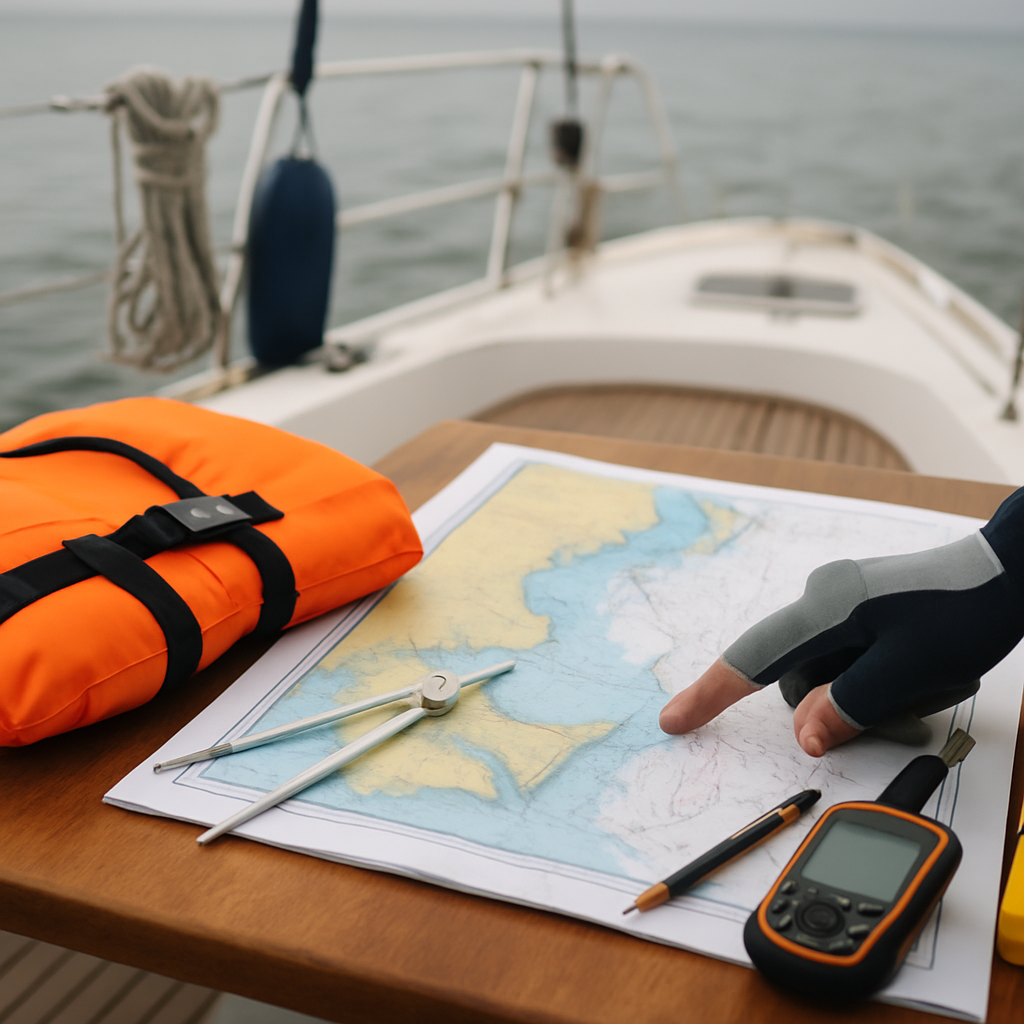
Even with the best electronics, paper charts are indispensable. Learn basic plotting, bearing taking, and dead reckoning.
- Keep updated paper charts of your cruising area and a basic navigation tool kit (parallel rulers, dividers, pencils).
- Practice a nightly position fix with bearings to shore objects to build confidence without screens.
GPS, Chartplotters, and AIS
A chartplotter with integrated GPS is an excellent investment. Automatic Identification System (AIS) units improve situational awareness in busy waterways.
- Mount chartplotters where they are clearly visible from helm positions and have a backup handheld GPS.
- Integrate AIS with your plotter or use a standalone AIS receiver/transponder for collision avoidance and identification.
VHF Radios and Digital Selective Calling (DSC)
Communication is crucial. A fixed VHF with DSC lets you send distress calls with location data; a waterproof handheld VHF serves as a dependable backup.
- Know channel etiquette, how to hail and respond, and carry a quick-reference card for emergency calls.
- Store spare batteries and keep handsets charged every trip.
Navigation Apps and Offline Planning
Apps provide weather overlays, tide times, route planning, and GRIB downloads. Use them—just don’t depend on them exclusively.
- Download charts for offline use and cross-check electronic routes against paper charts.
- Familiarize yourself with app features in calm conditions; complexity at sea is the enemy of safety.
Weather Readiness: Forecast Tools and Tactics for Confident Voyages
Good weather judgment comes from tools plus conservative decision-making. Your Essential Sailing Equipment should include systems to gather weather data and contingency plans for changeable conditions.
Sources and Interpretation
Combine official forecasts, local buoy and coastal warnings, and GRIB model outputs. Compare them and note trends rather than obsessing about single data points.
- Use official meteorological services for regional forecasts and model-based services for route-specific detail.
- Look at wind direction trends, not just peak forecasts—sudden veer or backing is more dangerous than a steady breeze.
Local Knowledge and Tidal Planning
Understanding local tidal streams, sea breezes, and geographic effects will often trump raw forecast numbers.
- Study tide tables and current atlases for your area; account for spring/neap variations on planned passages.
- Talk to local skippers and marinas to learn typical diurnal wind patterns or choke points with strong currents.
Storm Avoidance and Heavy-Weather Gear
When the weather looks ugly, avoidance is the best tactic. But if you must face it, have the right gear and practiced procedures.
- Keep storm sails, drogue/sea anchor options, and strong jacklines accessible.
- Practice reefing under sail and make sure crew can perform sail reductions quickly and safely.
On-Deck Essentials: Lines, Fenders, Hatches, and Safety Harnesses
Deck equipment affects daily comfort and critical operations like mooring, anchoring, and sail handling.
Lines and ropes
Carry main halyards, sheets, docking lines, a sturdy anchor rode, and a selection of shorter utility lines. Use appropriate material for each purpose (e.g., low-stretch ropes for halyards, soft handling docklines). Teach crew basic knots and splicing—knots fail less than poorly tied or worn ropes.
Fenders and dock gear
Choose fender size based on boat size and typical docking situations. Have extra fender lines and chafe protection. Stow fenders where they’re reachable during approach.
Hatches, ports, and ventilation
Ensure hatches seal and drain properly; replace worn seals to prevent water ingress. Adequate ventilation reduces condensation and improves comfort on overnight trips.
Safety harnesses and jacklines
For offshore or night sailing, equip every crew member with a harness and tether, and rig strong jacklines fore-to-aft. Practice clipping/unclipping under tension and never let the cockpit become complacent—life lines and secure attachment points are your last defense against going overboard.
Deck hardware and spares
Carry spare shackles, blocks, shackles pins, and fasteners. Regularly inspect running rigging and hardware for chafe, corrosion, or fatigue.
Maintenance, Storage, and Packing: Keeping Your Equipment Ready for Every Voyage
Equipment is only as good as its maintenance. A simple routine prevents failures at sea and extends gear lifespan.
Routine checks
Weekly or pre-departure checklists should include inspecting lifelines, checking engine oil and coolant, testing bilge pumps, confirming battery charge, and verifying navigation and communications functionality.
Storage and stowage
Store flares, charts, and electronics in waterproof containers. Keep critical items like life jackets, flashlights, and fire extinguishers in designated, easy-to-reach locations. Avoid storing heavy items high up where they can shift and cause injury.
Battery management
Maintain batteries with proper charging regimes and keep a separate starter battery if possible. Carry jump leads and a small inverter or USB power bank for charging handheld devices.
Cleaning and corrosion prevention
Rinse salt from lines, winches, and metalwork. Use corrosion inhibitors on stainless fittings and regular lubrication for winches and blocks. Replace sacrificial anodes as part of routine maintenance.
Packing for passages
Pack spare clothing, foul weather gear, extra food/water, and a redundancy of essential tools. Distribute heavy items low and central for stability and secure all gear to prevent shifting in rough seas.
Putting It All Together: Practical Tips, Checklists, and a Starter Gear List
This final section helps you transform lists into habit. Essential Sailing Equipment only delivers when crew know where things are, how to use them, and when to maintain them.
Practical Pre-Departure Checklist
- Weather check: multiple sources; print or save official forecast and GRIB files for route.
- Safety check: PFDs on board for every passenger, EPIRB/PLBs registered, flares unexpired.
- Systems check: battery state, engine oil, fuel level, bilge pumps tested, navigation devices powered.
- Stowage check: heavy items secured, hatches closed and sealed, lines coiled and ready.
- Crew briefing: MOB procedure, roles in a man-overboard, basic sail handling and reefing plan.
Starter Gear List — Essential Sailing Equipment (Compact)
- USCG/CE-approved PFDs (one per person) + throwable device
- EPIRB or PLB + registered information
- VHF radio (fixed) with handheld backup
- Chartplotter/GPS + paper charts and plotting tools
- Flares (as required) + strobe light or personal AIS beacon
- Anchor with appropriate rode and snubber
- Spare lines, shackles, blocks, and a compact tool kit
- Fire extinguisher(s) and galley fire blanket
- Foul weather gear, spare clothing, and first-aid kit
- Fenders, dock lines, jacklines, and safety harnesses
- Flashlight/headlamp, spare batteries, power bank
Training, Drills, and Experience
Equipment without training is a false sense of security. Run simple drills until responses are automatic.
- Practice MOB recovery and location drills using a throwable device or dummy weight.
- Reef sails, change sails, and deploy storm gear in calm conditions to build muscle memory.
- Review emergency communications and run a simulated distress call with DSC or VHF to ensure crew competence.
Frequently Asked Questions
What items are absolutely essential for a basic “Essential Sailing Equipment” kit?
For a reliable starter kit, it is recommended that you include a properly rated life jacket for each person, a throwable flotation device, a VHF radio (fixed with a handheld backup), chartplotter/GPS plus paper charts, an EPIRB or PLB, basic flares or visual signals, an anchor with suitable rode, spare lines and basic tools, a marine first-aid kit, and adequate lighting and batteries. This combination provides the safety, navigation, and emergency capabilities that form the core of Essential Sailing Equipment.
How should I choose the right life jacket for my sailing trips?
Choose a life jacket according to where and how you sail: coastal day sailing often allows comfortable Type-III style PFDs, while offshore trips demand higher-buoyancy, offshore-rated jackets with harness attachment points. Fit testing is critical—try the jacket on wearing the clothing you will use at sea, check straps and buckles, and ensure it doesn’t ride up when lifted. Consider service and maintenance requirements for inflatable PFDs, and label each jacket with its owner’s name and contact details.
Are paper charts still necessary if I use electronic navigation?
Yes. Electronic navigation is convenient but not infallible; power loss, software glitches, or GPS outages can occur. Paper charts, along with plotting tools and basic piloting skills, give you redundancy and keep you safe when electronics fail. It is advised that you maintain current paper charts for your cruising area and practice dead-reckoning and bearing techniques periodically to stay proficient.
What safety items require regular inspection or replacement?
Inspect and replace items on a schedule: check life jackets annually and after any use that could compromise them; replace flares before expiration; test EPIRBs/PLBs per manufacturer instructions and renew battery modules as required; service fire extinguishers and inspect pressure gauges; and regularly check jacklines, harnesses, and tether stitching for chafe. Keep a maintenance log to track inspections and replacements—this habit prevents failures at sea.
Should I carry an EPIRB or a PLB, and what’s the difference?
An EPIRB is typically registered to the vessel and is designed for larger offshore trips; it transmits on international emergency frequencies and is intended to alert search-and-rescue services to the boat’s position. A PLB is handheld, registered to an individual, and useful if crew may be separated from the vessel. For many sailors, the ideal setup is both: an EPIRB for vessel emergencies and a PLB for individual use during activities like going aloft or man-overboard scenarios.
What are best practices for packing and storing Essential Sailing Equipment?
Store critical safety items in clearly marked, easily accessible locations so they can be reached within seconds. Use waterproof containers for electronics and spare charts. Rotate food, water, and flares to avoid expiration, and keep spare batteries charged. Distribute weight low and central, secure loose items, and avoid storing heavy objects where they could shift and injure crew. Regularly inspect storage areas for water ingress and corrosion.
How can I prepare my crew for emergencies and ensure the equipment is used effectively?
Regular training and short drills are essential. Conduct familiarization briefings before every departure, assign clear roles, and practice a simple MOB procedure, DSC distress call, and basic firefighting and first-aid responses. Run sail-handling and reefing drills in calm conditions so crew can act without panic. Keep instructions for critical gear near the equipment and review them periodically to maintain readiness.
Final Thoughts: Building Your Kit Over Time
Essential Sailing Equipment is not a single shopping trip; it’s a stewardship process. Start with safety and navigation basics, then add items as you expand your cruising ambitions. Keep purchases practical: buy well-made items where failure is dangerous, and keep spares for those parts that wear out. Above all, make routine checks part of the voyage—your kit will repay you in peace of mind and safe returns.
If you begin a new preparation habit today—checking PFDs, confirming that the EPIRB is registered, or practicing one quick MOB drill—you will already be a safer sailor tomorrow. Essential Sailing Equipment matters. It is the difference between a trip you remember fondly and one you’d rather forget. Equip sensibly, practice consistently, and enjoy the sea with confidence.