Discover Confidence on the Water: How VHF Radio Basics Keep You Safe, Connected and Calm
Are you ready to stop guessing and start communicating like a pro? This practical guide covers VHF Radio Basics in straight talk — the gear, the setup, the protocols and the little tricks that make a stressful situation easier to manage. Before we begin: throughout this piece I will address you using the formal German pronoun “Sie” to remain respectful — but everything else is in clear English for easy reading.
VHF Radio Basics: A Tamtam Sailing Beginner’s Guide to Safe Communication
VHF Radio Basics are essential knowledge for any sailor. Whether Sie are stepping aboard for the first time or reinforcing routines before a long cruise, understanding the fundamentals of marine VHF will make your trips safer and more enjoyable. Very High Frequency (VHF) marine radios operate roughly between 156 and 174 MHz and are optimized for short-range, line-of-sight communication. That means hills, islands, and antenna height matter — a lot.
As Sie build your onboard communications kit, remember that VHF does not operate in isolation. For better situational awareness and to simplify giving clear positions during calls, pair your radio with a capable chartplotter — our practical advice on Chartplotter Navigation explains common features and mounting tips. Also review a thorough checklist of Essential Sailing Equipment so the rest of your kit (antennas, power supplies, cabling) supports reliable radio performance. Finally, communications are only one part of safety: make sure every crew member understands Life Jacket Essentials so distress calls match actual personal-safety measures and everyone knows what to do.
Why VHF matters for sailing
A VHF radio is often the fastest way to summon help, receive weather and navigational warnings, and coordinate with marinas or other vessels. In many coastal rescues, the initial alert and follow-up coordination happen over VHF — not email, not a phone app. If Sie want one reliable, simple tool aboard, this is it.
Range, power and antennas — simple rules
Keep these simple points in mind:
- Range is largely line-of-sight. Handhelds usually reach 4–6 nm; a fixed 25 W radio with a high masthead antenna can exceed 20 nm in good conditions.
- Higher antenna = farther reach. Fit your antenna as high as practical and avoid obstructions.
- Power matters. Handhelds are low power (1–6 W). Fixed units commonly offer 25 W high power; some have low-power settings for local nets.
Common misconceptions
Many first-timers assume VHF is like a mobile phone. It isn’t. It’s local, immediate and public. Everyone around can hear transmissions (unless using DSC for selective calls). Also, DSC alone isn’t a replacement for clear voice follow-ups when safe to do so. Use both tools together.
MMSI, DSC, and Channel Selection: VHF Essentials with Tamtam Sailing
MMSI — the vessel’s radio ID
MMSI stands for Maritime Mobile Service Identity. Think of it as a phone number for your vessel’s radio. It’s a nine-digit code that links your DSC-equipped radio to your registered vessel details. When Sie press a DSC distress button, the MMSI is part of the alert — and if your radio has GPS input it will often include your position automatically.
How to obtain an MMSI
Register through your national maritime authority or an approved agency. Rules vary by country — in some places you need a radio licence too. Keep the registration current: if you sell the boat or change contact details, update the MMSI record. It’s quick, but critical.
DSC — what it does and how to use it
Digital Selective Calling (DSC) allows digital distress alerts and selective calling of individual MMSIs. With DSC, you can send a distress signal that includes your MMSI and position. You can also call a specific boat digitally, avoiding long voice hails on Channel 16. But remember: DSC is a tool — one-button alerts are powerful, so use them for real emergencies and follow up with a voice transmission if possible.
Channel selection — don’t get lost on the dial
Marine channels are pre-assigned for different purposes. Learn the ones used in your cruising area. A quick guide:
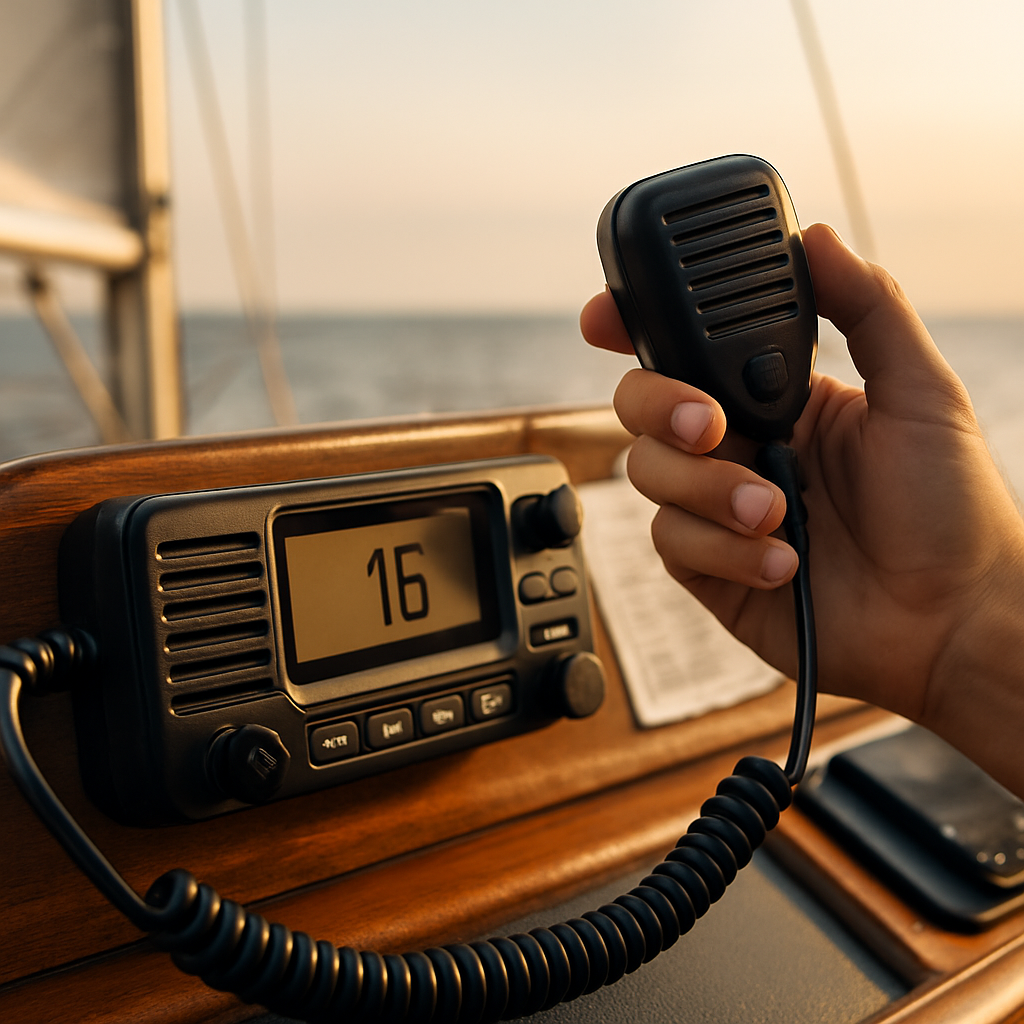
- Channel 16 (156.8 MHz): International calling and distress. Monitor it while underway. Only make initial hails here, then move to a working channel.
- Channel 70: DSC (digital) distress and calls — not for voice.
- Working channels: Regions often allocate channels for harbour calls, marinas and ship-to-ship traffic — common examples include channels in the 06–13, 68–88 ranges. Your local harbour will tell you which they prefer.
- Channel 13: Often used for bridge-to-bridge/navigation safety. Treat it as high priority in areas with busy commercial traffic.
Tip: keep a laminated cheat-sheet at the helm showing local working channels. It’s one of those small things that pays back big when the wind picks up and your brain doesn’t.
Choosing the Right VHF Radio for Your Boat: A Tamtam Sailing Guide
Choosing a radio comes down to purpose, budget and installation. There’s no single “best” radio for everyone; there’s only the best radio for Sie, given what Sie do on the water.
Handheld versus fixed-mount — pros and cons
Handhelds are great spares and convenient for short trips, tender use and as an emergency backup. They are lightweight and portable, but range is limited and battery life can be a concern. Fixed-mount radios, professionally installed with a masthead antenna, provide better range, more robust DSC features and often integrate with GPS and AIS. If Sie cruise coastal waters or sail overnight, invest in a fixed-mount unit.
Must-have features
When evaluating radios, look for:
- DSC capability with a clear, protected distress button.
- NMEA or integrated GPS input so your DSC distress message can include position automatically.
- Good waterproofing (IPX7 or better) and rugged buttons/readable display.
- External speaker or remote microphone options for noisy cockpits.
- Simple user interface — in an emergency Sie don’t want menu labyrinths.
Budgeting wisely
Expect to pay more for reliability than for bells and whistles. Mid-range fixed units usually offer the best long-term value for coastal cruisers: good audio, dependable transmission, DSC and integration options. Cheap units can be tempting, but a failing radio in foul weather is a false economy.
Setting Up and Testing Your VHF System Onboard: Tips from Tamtam Sailing
Installation and routine checks matter. A perfect radio at a poor antenna will underperform. Follow sensible steps and schedule tests so the system is ready when Sie need it most.
Installation checklist
- Mount the radio unit in a dry, accessible spot with a clear view of the display and controls.
- Position the microphone at the helm or a convenient reach from the steering position.
- Fit the antenna as high as practical — masthead if possible. Use a quality marine antenna and proper mount.
- Use marine-grade coax and connectors. Long runs increase loss — keep them tidy, short and free of sharp bends.
- Wire the power to a dedicated fused circuit. Follow manufacturer recommendations for wire gauge and fuse size.
- Connect GPS or NMEA input for DSC position reporting.
Common pitfalls and how to avoid them
A few recurring issues cause the most trouble:
- Poor antenna connections or corroded fittings — inspect and protect connectors.
- Running coax close to noisy electrical equipment — separate runs to reduce interference.
- Antenna placement near radar or metalwork causing signal shadowing — think about the whole mast when planning.
Testing procedures Sie should perform
Make testing part of your routine. Simple checks include:
- Daily pre-departure: power on, check display and microphone, ensure Channel 16 is monitored.
- Monthly: perform a radio check with a marina or coastguard station if available, or make a brief call on Channel 16 then switch to a working channel for any extended conversation.
- After any electrical work: re-test DSC functionality and speaker clarity.
- Annual or pre-season: have a professional check SWR (standing wave ratio) and antenna integrity, especially if range seems reduced.
VHF Radio Etiquette and Protocols Every Sailor Should Know (Tamtam Sailing)
Good radio manners save time and, sometimes, lives. VHF channels are public — others may be listening, including shore authorities. Be concise, polite and follow the established priority system.
Priority of traffic — what comes first
In order of urgency:
- Distress (MAYDAY) — Immediate threat to life or vessel.
- Urgency (PAN-PAN) — Serious problem but not immediately life-threatening.
- Safety (SECURITE) — Navigational warnings or weather information for all stations.
- Routine calls — Questions, docking arrangements, courtesy calls.
How to speak clearly — practical tips
Speak slowly, enunciate and use the phonetic alphabet for tricky names or coordinates (Alpha, Bravo, Charlie…). Keep transmissions short. Pause between sentences — that gives the other station time to reply. Avoid slang and keep language professional; remember, misunderstandings on the radio can escalate quickly.
Scripts to use in an emergency
Familiarity with the basic scripts reduces panic. Practise them in calm times so they come naturally under stress.
Distress (MAYDAY):
“MAYDAY, MAYDAY, MAYDAY. This is [vessel name], [vessel name], [vessel name]. My MMSI is [MMSI]. We are at [position]. Nature of distress: [brief description]. Number on board: [x]. We require immediate assistance. Over.”
Urgency (PAN-PAN):
“PAN-PAN, PAN-PAN, PAN-PAN. This is [vessel name]. [Describe the problem]. We request assistance. Over.”
Safety (SECURITE):
“SECURITE, SECURITE, SECURITE. All stations, all stations, all stations. This is [station]. [Give safety message]. Over.”
Everyday etiquette — do’s and don’ts
- Do identify your vessel name on initial calls.
- Don’t use Channel 16 for long conversations — hail there, then move to a working channel.
- Do keep transmissions concise and relevant.
- Don’t transmit profanity or jam channels with irrelevant chatter.
- Do respect commercial traffic; large ships have limited maneuverability and expect clear, brief communications.
FAQs About VHF Radios for Sailors: Answers from Tamtam Sailing
Frequently Asked Questions — VHF Radio Basics
Q: Do I need a licence to use a VHF radio?
Licensing requirements differ by country. In many European countries and the UK, Sie may need a radio operator certificate or a short VHF course to operate a fixed marine VHF, and MMSI registration is required for DSC radios. In other regions recreational use is less strictly regulated but registration is strongly recommended. Check your national maritime authority for exact rules in your sailing area and ensure compliance before you put to sea.
Q: What is an MMSI and why must it be registered?
An MMSI (Maritime Mobile Service Identity) is a unique nine-digit code assigned to your vessel or DSC radio. It allows rescue services and other vessels to identify and call your specific radio. Registering your MMSI ties the number to vessel details and emergency contacts. That speeds up rescues and prevents false alerts — keep the registration up to date whenever you change ownership or contact information.
Q: Can a handheld VHF be my main radio?
For very short local trips a handheld may suffice, but range and reliability are limited by antenna height and battery life. For coastal cruising or overnight passages a fixed-mount 25 W radio with a masthead antenna is far more reliable. If Sie choose a handheld as a primary device, always carry spare charged batteries, a waterproof case and a plan for limited range communications.
Q: How far will my VHF radio reach?
Range depends on antenna height, power output and obstacles. Handhelds typically manage 4–6 nautical miles; fixed radios with masthead antennas can reach 10–25+ nautical miles under good conditions. Over-the-horizon propagation is unlikely without repeaters. Regular checks of antenna condition and mount height often improve practical range more than upgrading the radio itself.
Q: What is DSC and when should I use it?
DSC (Digital Selective Calling) enables digital distress alerts and selective calls using MMSI numbers. Use DSC for immediate distress alerts (it transmits your MMSI and, if connected, your GPS position), and for routine selective calls to other vessels or shore stations. Always follow up a DSC distress alert with a voice transmission if circumstances allow, to provide additional detail and confirm the situation.
Q: Which channels should I monitor while sailing?
Monitor Channel 16 while underway for distress and initial hails. If you have DSC, Channel 70 should be monitored for digital alerts. Follow local instructions for harbour and marina working channels and switch to those for docking or long conversations. Know the channels used by vessel traffic services in your area and prioritise communications accordingly.
Q: How should I respond to hearing a MAYDAY call?
If Sie hear a MAYDAY, cease transmissions that might interfere, listen carefully and copy the distress details. If you are in a position to assist safely, transmit your position and intent. If you cannot help, remain on the channel and be ready to relay messages if rescue authorities request it. Do not broadcast false or speculative information — clarity is essential during rescues.
Q: How often should I test my VHF and DSC functions?
Power on and check basic functionality before every trip. Monthly checks — including short transmission tests and DSC test messages where permitted — are sensible. After any electrical or antenna work, re-test immediately. Consider an annual professional check of SWR and antenna integrity to catch performance degradation before it becomes critical.
Q: How can I reduce corrosion in VHF connectors?
Use marine-grade connectors, regularly inspect and clean fittings, and apply dielectric grease to exposed contacts where recommended. Protect connections with heat-shrink or marine sealants, keep microphones and units sheltered from spray, and replace corroded parts promptly. Good maintenance extends equipment life and avoids sudden communication failures.
Q: Should my VHF be connected to GPS or AIS?
Yes — connecting your VHF to GPS or NMEA sources enables DSC distress messages to include accurate positions, which can greatly speed rescue response. Integration with AIS gives richer situational awareness and helps when calling specific vessels. Plan connectors and cabling during installation so systems are robust and easy to maintain.
Q: What do I do if I’m unsure how to use my radio during an emergency?
Stay calm, broadcast a MAYDAY if life is at risk and give your vessel name, position (or best-known position), nature of distress and number of people aboard. If unsure of phrasing, follow the short script: MAYDAY, vessel name, position, nature of distress, number aboard. Help will usually arrive or rescue authorities will give further instructions. Practising the script ensures you deliver vital information quickly when under stress.
Practical pre-departure checklist for VHF readiness
Before casting off, run through this quick routine. It’s short and it works:
- Power on the VHF and confirm a clear display and working microphone.
- Check that Channel 16 is being monitored and that the radio receives local traffic.
- Verify antenna security and that coax connectors are dry and corrosion-free.
- Confirm the MMSI is programmed into your DSC radio and registration is current.
- Carry a spare handheld or spare batteries for peace of mind.
Final tips from Tamtam Sailing — stay capable and calm
Knowing VHF Radio Basics isn’t about impressing other boaters; it’s about being competent when it counts. Learn the simple scripts, practise radio checks during calm moments, and keep your gear well maintained. If Sie ever feel overwhelmed in an emergency, take a breath, remember the checklist and call for help — the radio will do the rest. Sail safe, stay curious, and keep your VHF close at hand.
If Sie would like a printable quick-guide or a downloadable checklist tailored to your region, consider contacting your local sailing club or the Tamtam Sailing community — many leagues and marinas publish localized frequency guides and easy reference sheets. A little preparation goes a long way on the water.