Tamtam Sailing: Life Jacket Essentials for Every Sailor — Keep Calm, Stay Afloat, Sail On
Attention: You love the water, the wind in your face, and the soft slap of waves against the hull. Interest: But safety? That little detail decides whether a day on the water becomes a lifelong memory—or worse. Desire: Imagine a calm mind on deck because Sie and your crew all know the Life Jacket Essentials and trust the gear you wear. Action: Read on, learn what matters, and leave the dock better prepared than yesterday.
Why Every Sailor Needs a Life Jacket
Accidents happen. They are rarely dramatic Hollywood moments and more often a split-second slip, a sudden jibe, or a bout of seasickness that leaves someone light-headed and vulnerable. That is exactly why Life Jacket Essentials belong at the top of every pre-sail checklist. A properly chosen and worn life jacket is not a suggestion—it is the simplest, most reliable wearable safety measure aboard.
While Life Jacket Essentials are indispensable, they are part of a broader safety mindset that includes solid anchoring skills and seamanship. Before casting off, verify your ground tackle and consult resources like Anchor And Line to ensure your anchor and rode match conditions. Also review our Essential Sailing Equipment checklist for complementary gear, and brush up on communications by reading VHF Radio Basics so you can call for help effectively.
The immediate purpose of a life jacket is to provide flotation and keep the airway clear. Beyond that, modern Personal Flotation Devices (PFDs) help reduce heat loss, improve visibility for rescuers, and give the wearer confidence to conserve energy while awaiting rescue. Consider this: a jacket bought and worn today may be the single piece of equipment that turns a dangerous moment into a story rather than a tragedy.
Legal frameworks in many regions also make life jackets mandatory in certain conditions. Even where laws are more relaxed, insurers, charter companies, and prudent skippers insist on them. More importantly, Sie should think of a life jacket as part of the social contract aboard: wearing one signals responsibility and care for the whole crew.
Choosing the Right Life Jacket: Types and Fit
Types of life jackets
Not all life jackets are made equal, and choosing the right type is part of the Life Jacket Essentials. Here are the principal categories and when each is appropriate.
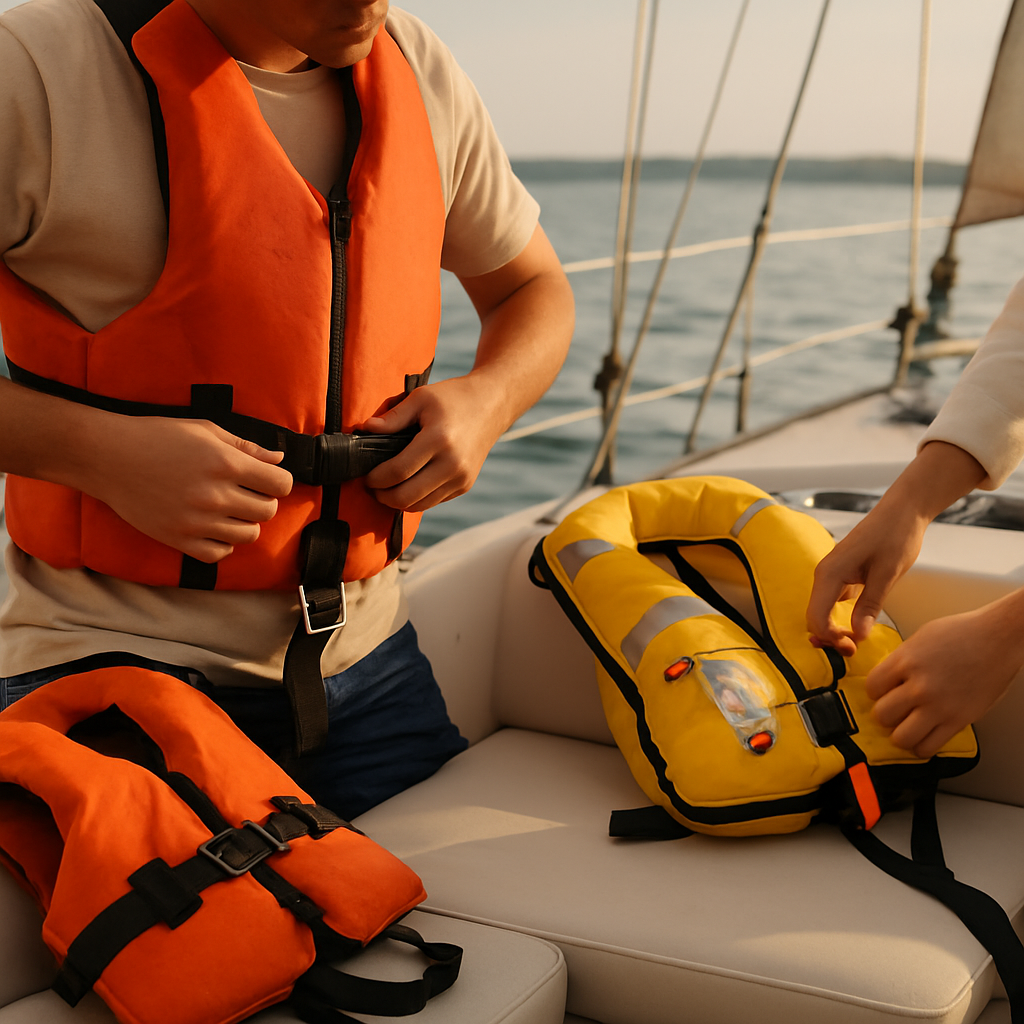
- Foam (inherently buoyant) PFDs: These provide continuous buoyancy without activation. Robust and maintenance-light, foam jackets are ideal for dinghy sailors, workboats, and anyone who expects to go in and out of the water regularly. They are reliable in cold water and do not require servicing.
- Inflatable life jackets: Deflated most of the time, they offer low bulk and excellent mobility—great for coastal cruising, racers, and skippers who dislike feeling encumbered. They come as manual, automatic (water-activated), or combined. Remember: inflatables require inspection and rearming after use.
- Hybrid jackets: Combine foam panels with inflatables to offer a compromise between comfort and guaranteed buoyancy. Good for sailors who want some freedom of movement but prefer inherent flotation as a fail-safe.
- SOLAS and offshore-rated jackets: Built for demanding conditions, these often include higher buoyancy, strobes, and robust harness interfaces. Choose these for offshore passages or when regulations require them.
- Child-specific and specialty PFDs: Small sailors need jackets with crotch straps and head support. If Sie carry children, invest in properly certified child PFDs rather than relying on adult sizes.
Fit: getting sizing right
A life jacket that does not fit is nearly useless. Proper fit is a cornerstone of Life Jacket Essentials. Here is how to get it right:
- Use the manufacturer sizing chart: Measure chest circumference and weight, and compare these figures to the sizing table. Generic labels like “one-size-fits-most” are not a substitute for checking measurements.
- Try it on with the clothing you will wear: If Sie sail in bulky layers or a drysuit, don the layers when fitting. Alternatively, select a jacket designed to go over foul weather gear.
- Check for upward migration: Lift the jacket at the shoulders—if it pulls up over the chin without pulling Sie forward, it is too loose. Tighten straps or change the size.
- Comfort vs. security: Mobility is important; Sie should be able to trim sails, reef, and reach the bow. But never sacrifice required snugness for comfort—adjust and test until both are acceptable.
Key Features to Look For in Life Jackets
Once Sie know the type and fit, focus on features. The right combination will determine how useful the life jacket is when seconds count.
Buoyancy and certification
Buoyancy ratings are usually expressed in Newtons or pounds. European standards (e.g., CE EN ISO) and SOLAS certifications set minimum performance criteria. For offshore sailing or cold water, choose higher buoyancy ratings and SOLAS-compliant equipment when required.
Visibility and signalling
Bright colours, reflective tape, integrated strobes, and a clear pocket for a waterproof light or strobe are all part of Life Jacket Essentials. A whistle remains a mandatory and effective low-tech signal—ensure one is attached and accessible.
Fastenings and adjustments
Multiple straps (waist, torso, and crotch) prevent the jacket from riding up. Quality zippers and buckles are vital; cheap hardware can fail under load. Look for easily adjustable straps that can be tightened with cold, wet hands.
Harness integration and attachment points
For bluewater sailors, a life jacket with an integrated harness is a game-changer. It provides a strong D-ring for tethers and simplifies moving about the deck while remaining clipped on. Check that the harness is designed to work with the jacket without obstructing fit or flotation.
Inflation system and maintenance indicators
For inflatables, a manual pull tab and/or an automatic water-activated system determines how and when the jacket inflates. Modern models include clear indicators that show whether the CO2 cartridge has been deployed or needs replacement—this feature directly supports the Life Jacket Essentials principle of readiness.
Materials and durability
UV-resistant fabrics, reinforced seams, and robust foam resist salt and sun. For sailors who spend long seasons in the sun, material quality is more than cosmetic—it affects buoyancy life and safety.
Maintenance and Care for Longevity
Buying the right jacket is only the beginning. Proper care keeps the jacket ready and extends service life—two indispensable components of Life Jacket Essentials.
Routine cleaning and drying
Rinse with fresh water after every saltwater outing. For stubborn grime, a mild soap and soft brush are sufficient. Never machine-wash or use strong solvents. Dry in the shade; prolonged UV exposure breaks down fabrics and foam.
Inspection checklist
Monthly: check straps, buckles, zippers, reflective tape, and general condition.
Quarterly or pre-season: examine foam for compression or brittleness, inspect discarded areas for seam failure, and test D-rings and harness connections.
After any inflation: immediately rearm and service inflatables and replace any used cartridges.
Servicing inflatables and replacing parts
Inflatables should be professionally serviced according to the manufacturer’s guidance—usually annually or biannually, depending on use. Replace CO2 cartridges and hydrostatic releases as recommended. Keep a small stock of spare cartridges and rearming kits aboard if Sie frequently sail away from ports.
Storage best practices
Store jackets loosely in a cool, dry place out of direct sunlight. Don’t pile heavy items on top. Avoid storing near fuels, solvents, or battery acids that can degrade materials. Keep service records, so Sie can quickly show compliance for charters or inspections.
How to Wear a Life Jacket Correctly on Deck
Knowing how to put on a life jacket is part of Life Jacket Essentials. Practice makes muscle memory—so everyone aboard should rehearse it until it becomes instinctive.
Step-by-step donning and checks
- Put the jacket on and fasten the main closure (zip, clip, or Velcro) fully. A partially fastened jacket is a liability.
- Tighten all straps. Shoulder straps, waist straps, and a crotch strap (if fitted) should be snug enough to prevent upward migration without cutting off circulation.
- Lift your arms or have a crewmate give a firm upward pull at the shoulders—if your chin or mouth becomes submerged, adjust immediately.
- Attach whistle, light, or strobe where indicated so they’re accessible and not buried in a pocket.
- If using an integrated harness, clip the tether to the D-ring before leaving protected areas. Test the clip and tether length in calm conditions so Sie are comfortable working clipped on.
Practical on-deck tips
– Wear a jacket while on deck in rough weather, during night passages, when children are aboard, or if Sie are single-handing.
– Keep jackets within reach if not worn—stashing them in a cockpit locker won’t help in a sudden man overboard.
– Practice donning a jacket in varying conditions—fast winds, awkward angles, and while wearing gloves. Real life is seldom neat; training should mirror that reality.
Top Life Jacket Brands for TamTam Sailing Readers
Brand choice matters: reputation, warranty, service networks, and spare parts availability are all important. Below are brands that regularly appear in recommendations and tests for their quality, innovation, and support.
- Spinlock: Favoured by racers and performance sailors for low-profile designs and excellent harness integration. Spinlock’s approach emphasizes freedom of movement without sacrificing safety.
- Crewsaver: Well-regarded for a wide range of PFDs from coastal foam jackets to robust inflatables and offshore solutions. Good service network across Europe and beyond.
- Baltic: A long-standing name in the cruising community with reliable foams and hybrid models known for comfort on long days at sea.
- Astral: Blends comfort and sustainable materials. Their jackets are popular for small-boat sailors who prize ergonomic fit and modern design.
- Helly Hansen: Trusted in marine apparel and PFDs, offering models that integrate well with foul weather gear—handy if Sie sail in changeable climates.
- Mustang Survival: Premium survival gear and life jackets, commonly chosen for offshore workboats and serious bluewater sailors who want advanced features and durability.
- Gill: Known in racing and coastal circles, Gill produces solid jackets with a sporty focus and dependable materials.
- Onyx / Stearns: Affordable, widely available, and practical for families, beginners, and watersports where budget and accessibility matter.
Packing and Pre-Sail Checklist — Quick Reference
- One life jacket per person: properly sized, inspected, and accessible.
- Spare CO2 cartridges and rearming kits for inflatables.
- Lights, strobes, and whistles attached and functional.
- Harnesses and tethers in good condition if Sie intend to clip on while on deck.
- Logbook with maintenance dates, rearming records, and service stamps.
- MOB drill scheduled and practiced with all crew before leaving the marina.
Conclusion
The Life Jacket Essentials are simple when Sie break them down: choose the right type, make sure it fits, pick the features that meet your sailing profile, and care for the jacket so it will perform when needed. Safety on the water starts long before a problem appears; it begins on land, at the preparation stage, and continues through regular inspection and practice.
The next time Sie step aboard, take a minute—check the jackets, fasten them correctly, and run a short drill with your crew. Those small habits turn into safety culture. And who knows? The calmer Sie feel about safety, the more Sie will enjoy the wind, the waves, and the pleasure of being at sea.
FAQ — Life Jacket Essentials
- What type of life jacket should I buy for coastal cruising?
- For coastal cruising, Sie will often want a balance between comfort and safety. A reliable option is a hybrid or high-quality inflatable PFD with manual and automatic inflation options; these give low bulk while providing high buoyancy when needed. If Sie frequently expect to be in the water (e.g., tendering, frequent swimming) or sail with children, consider foam jackets for continuous buoyancy. Also check for features such as reflective tape, an integrated light pocket and easy-to-use adjustments. Ultimately, try on different models and simulate onboard tasks to ensure mobility without compromising fit or security.
- How should a life jacket fit—what are the key checks?
- Proper fit is non-negotiable. Measure chest circumference and compare to the manufacturer’s size chart, then try the jacket on with the clothing you will wear on deck. Fasten all closures and tighten straps snugly. Conduct the upward-pull test: a crewmate should lift the jacket at the shoulders—if the jacket slips over the chin or mouth, it is too large. Ensure the jacket allows necessary movement—reaching, trimming and climbing—without riding up. For children, make sure crotch straps and head support are present and correctly adjusted.
- Are inflatable life jackets safe?
- Inflatable jackets are safe when chosen and maintained correctly. They offer high buoyancy and low bulk, which enhances mobility and reduces fatigue. However, they rely on a working inflation mechanism, so regular inspection and servicing are essential. Consider a manual/automatic hybrid if Sie are concerned about accidental inflation or want the option to inflate deliberately. Remember that inflatables may not provide as much immediate flotation if they fail to inflate; for that reason, some sailors prefer hybrid or foam jackets for children or when frequent water contact is likely.
- How often should I service my inflatable life jacket?
- Manufacturers typically recommend annual visual inspections and professional servicing every 1–3 years, depending on usage and model. Service intervals can be shorter for jackets used heavily in saltwater or exposed to UV and rough conditions. Any inflation event—automatic or manual—requires immediate rearming and a service check. Keep records of service dates and replace CO2 cartridges, hydrostatic releases or other consumables as advised. Regular checks of the indicator window will help Sie spot when rearming is necessary.
- Do life jackets expire?
- Life jackets do not have a single universal “expiry date,” but materials degrade over time. Foam may compress, fabrics and stitching can weaken from UV and salt, and inflatable bladder materials can become brittle. Inflatable systems often carry manufacturer-specified service intervals and part replacement schedules. As a rule of thumb, closely inspect jackets older than five years and follow manufacturer guidance—replace any jacket showing compromised buoyancy, frayed straps, cracked buckles, or damaged bladders. When in doubt, replace rather than risk a failure at sea.
- Can I wear a life jacket under a foul weather jacket?
- Sie can, but fit and access matter. If Sie intend to wear heavy layers, either choose a PFD sized to accommodate those layers or select a model specifically designed to be worn over foul weather gear. Ensure that straps and closures remain accessible and adjustable with gloves on, and that shoulder and crotch straps are effective. Some sailors prefer jackets meant to be worn over outer layers to avoid compressing the PFD and reducing its effectiveness.
- What features are essential for offshore sailing?
- Offshore life jackets should include higher buoyancy (often SOLAS-rated if required), integrated attachment points for tethers, a strong and comfortable harness, and compatibility with a strobe or portable AIS/light. A whistle, reflective tape, and high-visibility colours are essential. Consider jackets with comfortable collars to aid in airway protection and features that work with foul weather gear. Durability and an easily serviced inflation system are also key—to ensure long-term reliability on extended passages.
- What should children wear?
- Children require PFDs specifically designed for their weight and size. Choose jackets with crotch straps to prevent ride-up and head support for very small children. Ensure the jacket’s buoyancy rating matches the child’s weight, and conduct fit tests similar to adults: fasten all straps, perform the upward-pull test, and make sure the child can breathe comfortably. For infants and toddlers, pick models certified for the appropriate weight range and ideally practice wearing the jacket so the child is comfortable.
- Is it mandatory to wear life jackets on deck?
- Laws vary by country and region, and local rules may mandate life jacket use in certain conditions (e.g., night, offshore, for children). Even where not legally required, wearing a life jacket is strongly recommended in rough weather, during night passages, and whenever Sie are single-handing or have inexperienced crew. Many charter companies and insurers also enforce wearing PFDs in defined scenarios. From a safety culture perspective, encouraging habitual use for higher-risk activities is best practice.
- How should I maintain and store life jackets?
- Rinse jackets with fresh water after saltwater exposure and air-dry in the shade. Inspect straps, buckles, seams and foams regularly; for inflatables, check the bladder and inflation indicator. Store jackets loosely in a cool, dry place away from sunlight, fuels, and chemicals. Keep service records as part of your vessel log. Replace or service any PFD that shows significant wear or that has been deployed.
Ready to review your own gear? Start with your jackets today: check fit, inspect condition, and ensure Sie and your crew know where every jacket is stored. Then go sailing—safely and with confidence.